News
Published over 14 years ago. See the latest and most current information on News.
Research funded by Aberdeen-based charity, Friends of ANCHOR, and led by researchers at the University of Aberdeen and NHS Grampian, has identified ground-breaking findings which could fundamentally change the face of cancer treatment.
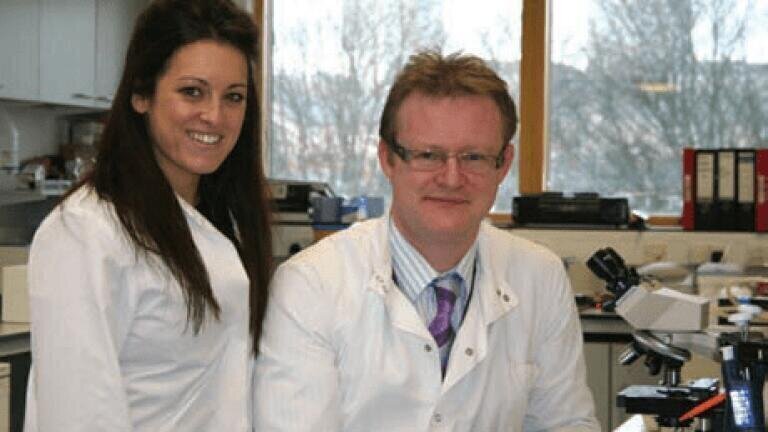
These findings were presented at the American Society of Clinical Oncology Gastrointestinal Cancer Symposium held recently in San Francisco, (Jan 20-22). Led by Dr Russell Petty – considered a top researcher and clinician in Aberdeen for gastrointestinal cancers – the study, which began in December in 2007 and concluded in December last year, involved 40 patients with oesophageal and gastric cancer in NHS Grampian. The research team used Gene Chip technology to profile the entire genetic information of the patients’ cancers, as well as PET scans to image how metabolically active the tumours were. The study has identified a ’gene signature’ from the tumours that can be used alongside PET scans to predict which patients will and won’t respond to chemotherapy treatment. It also identified some genes which may be useful targets for more effective new drugs in the future. Dr Petty said: “These results are an important step towards our goal of individualising and ultimately optimising treatment for each patient. This will help us to move towards a situation where we can ensure that patients avoid any unnecessary treatment that would prove ineffective to ultimately maximise the chances of treatment success in each case.”
A particularly significant finding identified that the expression of the leptin gene in cancers, which is known to play a key role in regulation of body weight, appears to be important in determining whether patients’ cancerous tumours will respond to treatment or not. This evidence clearly indicates a strong correlation between oesophageal cancers and increased body weight and so by identifying more precisely how these two are linked it helps determine how new, more effective drugs for the disease could be developed. Dr Petty goes on to explain: “Findings, such as the link between oesophageal cancers and increased body weight, has provided us with insights into the reasons why some cancers respond well to treatment and some don’t and why some cancers behave more aggressively than others. Ultimately and most importantly, this provides the foundation for the development of more effective drugs in the future.” The project was funded by Friends of ANCHOR which directly supports cancer and haematology care in the region through fundraising for the main cancer care facility in the North-east, the ANCHOR Unit at Aberdeen Royal Infirmary as well as cancer research projects taking place at Aberdeen University and the Robert Gordon’s University. This year marks the 15th anniversary of the charity which has invested over £1.5 million into Northeast cancer research since the charity’s inception.
ILM 51.6 Sept 2026





 Product directory