News
Published over 13 years ago. See the latest and most current information on News.
With consumption of raw or uncooked fruit and vegetables increasing as consumers follow a healthier lifestyle, ensuring fresh produce is free from bacteria such as Salmonella is crucial.
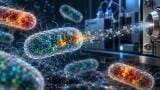
As an alternative to current chlorine-based decontamination, scientists at the Institute of Food Research are investigating the use of plasmas to effectively control microrganisms without the need to apply extreme conditions such as high temperatures.
Dr Arthur Thompson, who has been using cold atmospheric plasmas on different fresh foods found that Salmonella could be effectively inactivated by plasmas, but the length of exposure varied greatly depending on the type of produce. Other variables, such as the ambient temperature of the produce or the growth phase of the Salmonella had no significant effect. Inactivation on food surfaces took longer than on an artificial membrane filter surface.
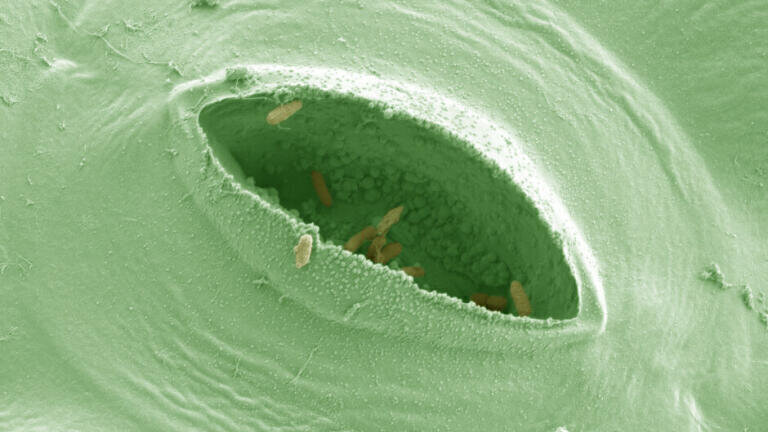
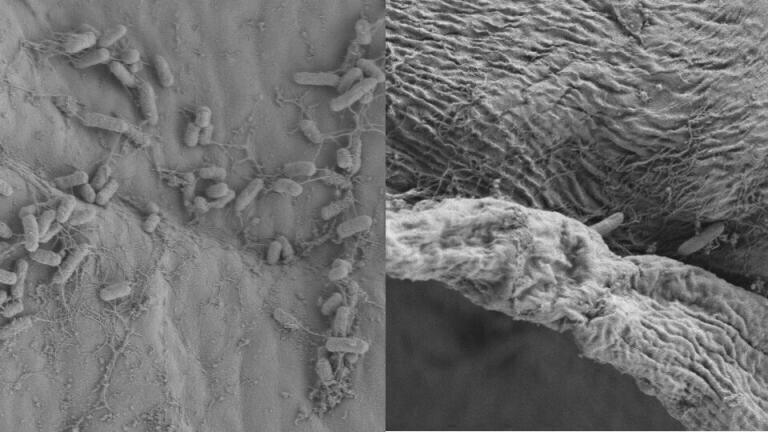
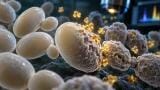
To understand why, the researchers looked at the food surfaces with an electron microscope and saw how Salmonella could ‘hide’ from the effects of the plasmas. Different structures, such as the bumps on the strawberries, the pores in lettuce leaves or the cell walls of potatoes create shadowed zones that block plasma reaching bacteria.
The work was funded by the Biotechnology and Biological Sciences Research Council.
“The results suggest scaled up devices or combinations with other mild treatments could provide a very effective solution for destroying bacteria with little or no effect on the produce itself.” said Dr Thompson. “What this study shows is that it will be important to take into account the type of food and its surface structure.”
Reference: Inactivation of Salmonella enterica serovar Typhimurium on fresh produce by cold atmospheric gas plasma technology, Food Microbiology doi: 10.1016/j.fm.2012.08.007
ILM 51.6 Sept 2026




 Product directory

















.jpg)
,-photo-Karin-Allander.jpg)