News
Published over 6 years ago. See the latest and most current information on News.
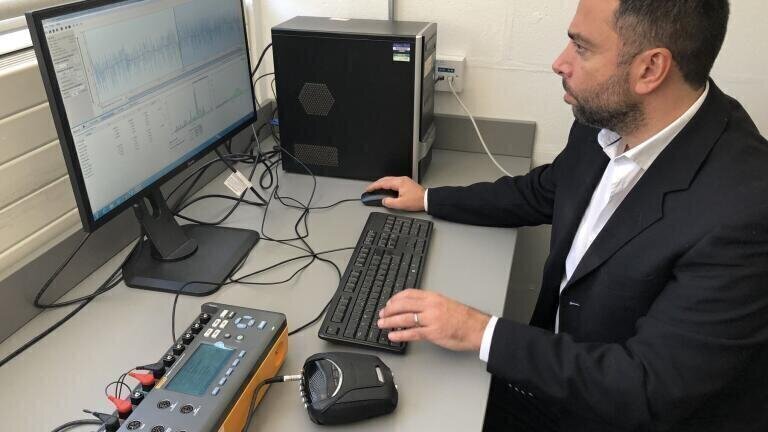
An alternative to obtaining blood by finger-prick test for checking blood sugar levels for both healthy and diabetic patients could be on the horizon, using technology developed at the University of Warwick, based around a non-invasive wearable sensor for detection of hypoglycaemic events from ECG data. Currently the NHS provide continuous glucose monitors for regular blood checks, which take a sample by needle and display data on a screen; in many cases the systems require calibration twice a day.
Dr Leandro Pecchia’s team at the University of Warwick have published a study(1) proving that using the latest findings of Artificial Intelligence (ie deep learning), they can detect hypoglycaemic events from raw ECG signals acquired with off-the-shelf non-invasive wearable sensors.
Two pilot studies with healthy volunteers found the average sensitivity and specificity approximately 82% for hypoglycaemia detection, which is comparable with the current CGM performance, although non-invasive.
Dr Leandro Pecchia from the School of Engineering at the University of Warwick said: “Fingerpricks are never pleasant and in some circumstances are particularly cumbersome. Taking fingerpricks during the night certainly is unpleasant, especially for patients in paediatric age.
“Our innovation consisted in using artificial intelligence for automatically detecting hypoglycaemia via few ECG beats. This is relevant because ECG (patterns) can be detected in any circumstance, including sleeping.”
“Our approach enable personalised tuning of detection algorithms and emphasizes how hypoglycaemic events affect ECG in individuals. Based on this information, clinicians can adapt the therapy to each individual. Clearly more clinical research is required to confirm these results in wider populations. This is why we are looking for partners.”
(1) ‘Precision Medicine and Artificial Intelligence: A Pilot Study on Deep Learning for Hypoglycemic Events Detection based on ECG’ Jan 13 Nature Springer journal Scientific Reports
ILM 51.6 Sept 2026


 Product directory


.jpg)
.jpg)



















.jpg)
