News
Published over 6 years ago. See the latest and most current information on News.
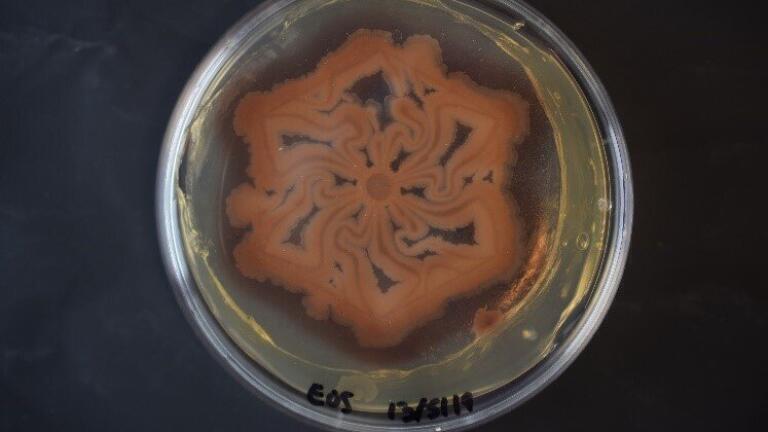
Physicists and biologists at the University of Warwick have teamed up to develop a new method(1) for engineering living materials that could see a transformation in tissue engineering and bio-art, as well as new ways to research cellular interactions.
Living cells have many properties that non-living materials simply don’t. The ability of controlling the emergent behaviours of cells and organising them into arbitrary patterns is a key step forward towards utilising living materials, for uses such as organs on a chip. This is why new technologies are being developed to obtain such an ability.
Grounded on the physics of meniscus generation, the researchers applied the new technique called MeniFludics, to create structures into gel surfaces. Evaporation of water from gel materials lead to formation of open channels which can be used for guiding the direction and speed of cellular expansion.
Dr Vasily Kantsler, from Department of Physics at Warwick said; “I believe that our catchy named (Menifluidics) technique will enable new opportunities in biophysical and biomedical research and applications such as antibiotic resistance and biofouling”
Dr Munehiro Asally, from School of Life Science added: “We hope MeniFluidics will be used widely by biophysics, microbiologists, engineers and also artists! As it is a simple and versatile method.”
(1) Published in the journal ACS Synthetic Biology, titled 'Pattern engineering of living bacterial colonies using meniscus-driven fluidic channels'
ILM 51.6 Sept 2026




 Product directory