Research news
Study has suggested that the balance between polyunsaturated and monounsaturated fatty acids in the diet may alter T-cell membranes, increase sensitivity to ferroptosis and influence immune responses, including CAR T-cell therapy
A recent study has reported that the balance of fats in the diet may help to determine how well key immune cells survive, function and support responses against infection and cancer.
The research has focused on T cells, a central class of immune cell that helps the body to fight infection, support antibody production, attack tumours and drive chimeric antigen receptor T-cell (CAR T) therapy. For T cells to perform these roles effectively, they must remain viable and retain the cellular fitness required to respond to immune challenge.
The research team from State Key Laboratory of Systems Medicine for Cancer, Shanghai Cancer Institute, Renji Hospital, Shanghai Jiao Tong University School of Medicine, Shanghai, China, examined the relationship between two broad classes of dietary fat:
Polyunsaturated fatty acids contain multiple carbon–carbon double bonds which are chemically weaker and so can make them more susceptible to reactions such as oxidation. Monounsaturated fatty acids contain only one carbon–carbon double bond and are generally less susceptible to this type of chemistry.
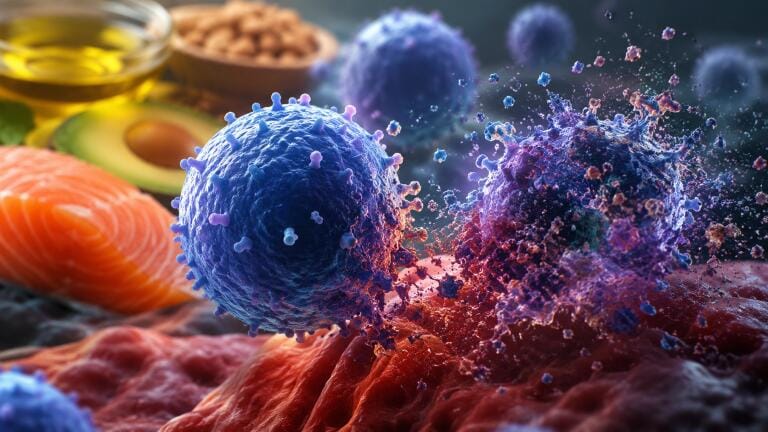
According to the study, a diet with a higher ratio of polyunsaturated fatty acids to monounsaturated fatty acids can enrich T-cell membranes with lipids that are more vulnerable to oxidation. This altered membrane composition appears to make T cells more sensitive to ferroptosis, an iron-dependent form of regulated cell death driven by lipid peroxidation.
Ferroptosis has become an important area of research in immunology and cancer biology because it links cellular metabolism, membrane chemistry and cell survival. In the context of T cells, the findings suggested that membranes rich in oxidation-prone lipids may push the cells closer to a lethal threshold. Once this threshold is crossed, T cells may fail to survive long enough or function strongly enough to sustain effective immune responses.
The study indicated that this mechanism could weaken several T-cell-dependent processes, including antibody responses, antitumour immunity and the performance of CAR T-cell therapy. This form of therapy relies on T cells that have been engineered to recognise and attack cancer cells which means their persistence and functional durability are central to treatment success.
The work also identified a lipid remodelling pathway involving acyl-CoA synthetase long-chain family member 4. This enzyme helps to determine how much polyunsaturated fatty acid content is incorporated into T-cell membrane phospholipids. By altering the lipid composition of these membranes, the pathway appears to influence the degree to which T cells become vulnerable to ferroptosis.
The researchers also observed similar patterns in human peripheral blood T cells, a finding that suggested the mechanism may have relevance beyond experimental models. Although further work will be required to assess how directly the results translate to dietary advice or clinical practice, the study has strengthened the case that nutrition should be treated as an active variable in immune research rather than as background context.
For laboratory studies, the findings carry a practical warning. The composition of experimental diets, including the balance between different classes of fatty acid, may affect immune readouts and contribute to variation between studies. The researchers’ findings therefore support closer control and clearer reporting of feed composition in studies of immunity, cancer and cell therapy.
For medicine, the work has raised the possibility that nutritional strategies could eventually help to fine-tune immune responses or improve personalised treatment. Such approaches would need careful testing, particularly because immune activation can be protective in some contexts and harmful in others. However, the study has pointed to a plausible biological route by which dietary fat composition may affect the fate of T cells and – in turn – influence the strength of immune defence and cancer treatment response.
In practical terms, the research suggested that the balance between polyunsaturated and monounsaturated fatty acids may alter the lipid architecture of T-cell membranes, change their sensitivity to ferroptosis and shape the effectiveness of immune responses. The findings add to a growing body of evidence that diet can influence immunity through defined cellular and molecular pathways.
For further reading please visit: 10.1016/j.lmd.2026.100128
ILM 51.6 Sept 2026




 Product directory


.jpg)
.jpg)
















,-photo-Karin-Allander.jpg)