Research news
Scientists have uncovered two previously unknown ways that the widely used antibiotic doxycycline disables bacteria, a discovery that could help pave the way for new treatments against antibiotic-resistant infections. The study [1], published in Nature Communications, reveals how doxycycline disrupts bacterial protein production through mechanisms that were previously unknown.
Researchers at the University of Exeter investigated Coxiella burnetii, a bacterium that is particularly sensitive to doxycycline, to understand why the antibiotic remains highly effective even at low concentrations. Their findings reveal that the drug attacks bacterial protein production through multiple mechanisms, opening new possibilities for designing future antibiotics.
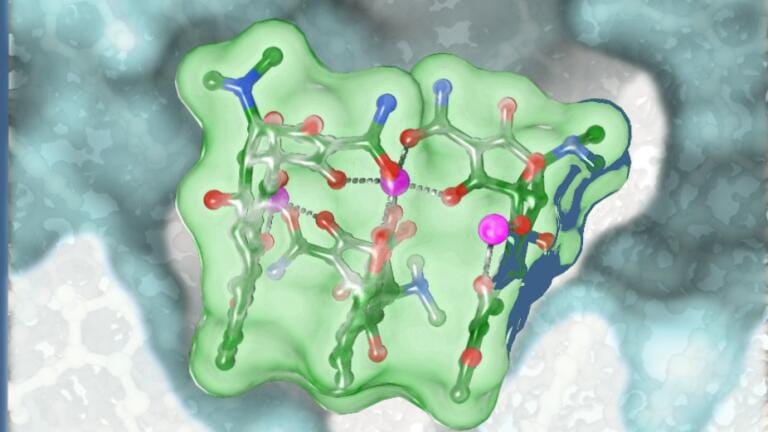
Bacteria rely on ribosomes to produce the proteins they need to grow and survive. While doxycycline was already known to interfere with one stage of this process, the Exeter team discovered an additional mechanism in which multiple doxycycline molecules stack together inside the ribosome, blocking the exit channel through which newly formed proteins normally leave. This effectively halts protein production, preventing the bacteria from growing and reproducing.
The researchers also identified a second unexpected mechanism in Escherichia coli. In this case, a single doxycycline molecule was found to trigger a dramatic structural change in the ribosome, locking it into an inactive state that had not previously been observed.
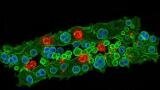
The discoveries were made using cryo-electron microscopy, allowing the research team to examine bacterial ribosomes at molecular resolution and reveal interactions that were previously impossible to observe.
Professor Nicholas Harmer, who led the research at the University of Exeter’s Living Systems Institute, said: “Recent advances in electron microscopy allow us to observe molecular structures in greater detail than ever before. We were surprised to discover an entirely new mechanism for how doxycycline works against Coxiella. We now need to investigate whether these mechanisms can be exploited in other bacteria that have become resistant to antibiotics, which could open up an exciting avenue for new treatments.”
Antibiotic resistance is recognised as one of the most significant global health challenges, with many bacterial infections becoming increasingly difficult to treat as resistance spreads. By revealing previously unknown ways that doxycycline disrupts bacterial cells, the study provides researchers with new targets that could be explored in the development of future antibiotics.
Lead author Dr William Stuart said: “This result really took us by surprise – we had no idea we would find such a beautiful mechanism that explains why the antibiotic is so effective in treating C. burnetii infections.”
The study was funded by the UKRI Biotechnology and Biological Sciences Research Council and the Defence Science and Technology Laboratory.
More information online
1. Cryo-EM reveals multiple mechanisms of ribosome inhibition by doxycycline published in Nature Communications
ILM 51.6 Sept 2026



 Product directory


.jpg)
.jpg)
















,-photo-Karin-Allander.jpg)