Research news
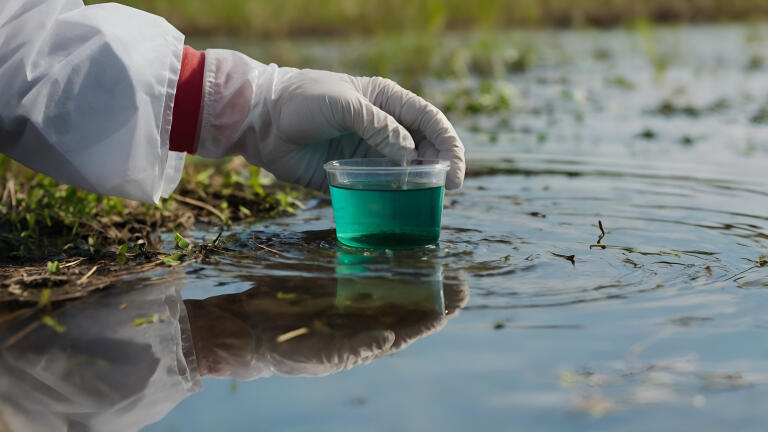
Antibiotics may continue to drive antimicrobial resistance long after they have been broken down in wastewater treatment plants, according to new research [1] from the University of Exeter and the University of Queensland.
Published in Nature Water, the study is the first to show that antibiotic transformation products – compounds formed as antibiotics degrade in the environment – can exert selective pressure on bacteria comparable to the original drugs from which they originate.
Antimicrobial resistance is a growing global health threat, contributing to an estimated five million deaths annually. While wastewater treatment reduces concentrations of antibiotics released into the environment, the impact of their breakdown products has remained largely unexplored.
The researchers investigated metabolites formed from several classes of antibiotics and found that some retained the ability to promote resistance even after the parent compounds had degraded. In some cases, the transformation products triggered resistance at concentrations similar to those of the original antibiotics.
Laboratory experiments showed that bacterial communities in wastewater samples collected in both Australia and the UK developed resistance when exposed to metabolites from three different antibiotic classes.
The findings suggest that wastewater treatment plants may continue to contribute to antimicrobial resistance despite reducing antibiotic concentrations. As a result, current environmental risk assessments could be underestimating the contribution of antibiotic pollution to the spread of resistant bacteria.
Pooja Lakhey of the University of Queensland, who co-led the study, said: “Our research shows that wastewater treatment plants can act as hidden reservoirs of bioactivity, with both antibiotics and metabolites contributing to driving resistance.”
Previous monitoring studies identified high concentrations of several antibiotic metabolites in wastewater systems, with some treatment plants removing these compounds more effectively than others. The researchers suggest this variation could help identify treatment strategies capable of reducing resistance-driving activity before wastewater is discharged into the environment.
Dr Aimee Murray, senior lecturer in microbiology at the University of Exeter, said environmental assessments should consider both antibiotics and their breakdown products where these retain biological activity.
The team believes future wastewater treatment approaches should focus not only on removing antibiotics themselves, but also on eliminating transformation products that continue to promote resistance in environmental bacterial communities.
More information online
ILM 51.6 Sept 2026



 Product directory


.jpg)
.jpg)
















,-photo-Karin-Allander.jpg)