Research news
Researchers have developed microlasers capable of detecting individual molecules - and even single atomic ions - in a breakthrough that could pave the way for highly sensitive diagnostic and biosensing technologies.
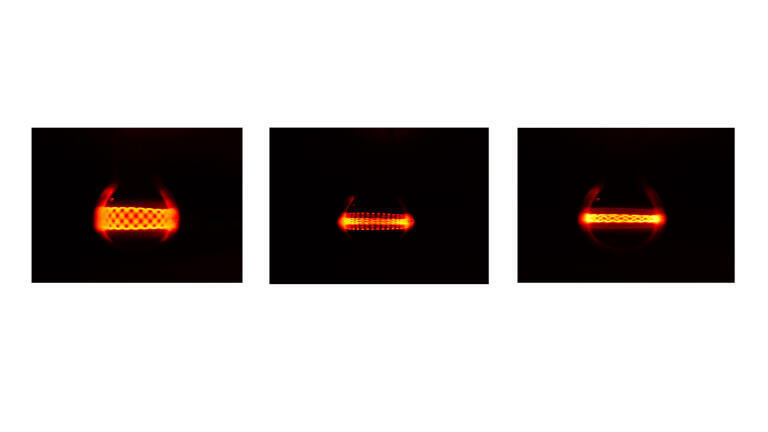
The work [1], led by scientists at the University of Exeter’s Living Systems Institute and published in Nature Photonics, demonstrates a new level of precision in whispering gallery mode (WGM) microlaser sensing, where light circulates continuously within microscopic glass spheres to detect minute surface disturbances.
Measuring between approximately 0.1 mm and 0.01 mm in diameter, the glass bead microlasers confine light along their inner surface, creating a highly sensitive optical system. Even the binding of a single molecule can subtly alter the circulating light signal, enabling detection at an unprecedented scale.
Previous studies have shown that these microlasers can be introduced into living cells as optical barcodes to track biological processes. The latest advance extends their capability further, pushing sensitivity down to the level of single molecules and atomic ions.
To achieve this, the team combined several enhancement strategies. Gold nanorods were added to the microlaser surface, generating nanoscale ‘hot spots’ that intensify light–matter interactions. The researchers then applied self-heterodyne beatnote detection, enabling them to identify extremely small frequency shifts caused when a molecule or ion binds to one of these regions.
By monitoring multiple laser signals simultaneously, the system is able to confirm single binding events with higher confidence, improving both sensitivity and reliability.
Professor Frank Vollmer, who led the study, said the development marks a step towards compact lab-on-a-chip systems capable of detecting molecular changes associated with disease processes. Potential applications include early disease diagnostics and the detection of subtle biomolecular changes such as protein interactions and enzymatic activity.
Dr Samir Vartabi Kashanian, a co-author on the study, highlighted the interdisciplinary environment at the Living Systems Institute, where physicists, chemists and biologists collaborate to translate optical innovations into practical biosensing tools.
.The study was supported by the Engineering and Physical Sciences Research Council.
More information online
ILM 51.6 Sept 2026



 Product directory


.jpg)
.jpg)















,-photo-Karin-Allander.jpg)