Research news
A novel handheld sensor measures acetone in exhaled breath within seconds, offering a non-invasive way to track fat metabolism for weight management and clinical conditions such as diabetes and epilepsy
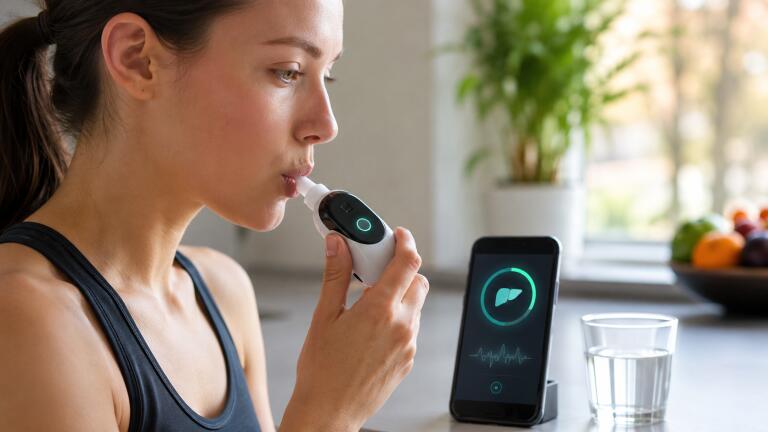
Researchers have built a handheld breath detector that can indicate whether the body is burning fat, using a single exhalation. The device measures acetone, a molecule released into the breath when the body breaks down fat and returns a reading – it is claimed – in around 90 seconds with accuracy the researchers say is comparable to laboratory instruments.
The team behind the work at ETH Zurich, Switzerland, says the technology could help people to monitor their own metabolism and could allow clinicians to personalise treatment for conditions including obesity, diabetes and epilepsy.
“To make ... information available to patients, we need to shrink … technologies into compact, user‑friendly devices,” said Dr. Andreas Güntner, senior author on the study and a researcher at ETH Zurich. Güntner’s group has spent around ten years developing the sensor technology that underpins the device.
Breath acetone has long been recognised as an indicator of metabolism, since its concentration increases as the body shifts from burning carbohydrate to burning fat. Measuring it accurately has typically required either bulky laboratory equipment or consumer devices that only perform reliably at high concentrations of acetone.
To test the detector, the researchers evaluated it with twelve healthy adults under everyday conditions. Across the trial, the device is reported to have measured acetone concentrations ranging from 0.2 to 45 parts per million (ppm) over 312 breath samples, with results that closely matched those obtained by mass spectrometry which is the established laboratory method for breath‑acetone analysis.
The team then monitored breath acetone across four separate scenarios:
Breath measurements were compared against established metabolic markers, including blood ketone and glucose levels, to establish how closely the device tracked genuine physiological change.
Breath acetone remained low following light exercise and a high‑carbohydrate meal, but rose after intense exercise, reflecting the body’s greater reliance on fat as a fuel source in that scenario. Following intense exercise, participants’ acetone levels fell after a high‑carbohydrate meal, stayed elevated after the fat‑rich meal, and continued to rise during fasting, a pattern that mirrored changes recorded in blood and glucose markers.
“These findings show that we have the high performance needed for applications such as clinical studies, where you really want to distinguish these slight differences in fat metabolism,” said Simone Hersberger, a doctoral candidate at ETH Zurich and first author on the study.
Ease of use for the device was a central design priority for the team. During each measurement, an accompanying smartphone application guides the user to exhale with the correct force and duration, supporting consistent results between readings. Built‑in quality checks are designed to reject improper breaths or contaminated air, to help ensure the reliability of each measurement.
An ETH Zurich spin‑off company called Alivion AG has already commercialised a breath‑acetone analyser under the name ‘Nutrion’ which is being used in clinical studies of epilepsy, as well as by individuals tracking their own breath acetone as a marker of fat metabolism for weight loss or athletic performance.
“Now it’s … time to spread it out into clinical trials and answer questions such as the effectiveness of different fasting therapies by providing personalised guidance,” said Güntner. He added that the broader ambition is to move metabolic monitoring out of the clinic and into the home, so that patients would no longer need to visit a healthcare professional to obtain this kind of information.
For further reading please visit: 10.1016/j.device.2026.101226
ILM 51.6 Sept 2026



 Product directory


















,-photo-Karin-Allander.jpg)







.jpg)
