Research news
Researchers have described a preclinical strategy that uses targeted antibodies and epitope-edited stem cells to make blood stem cell transplantation safer and more precise for sickle cell disease, beta-thalassaemia, immune deficiencies and some blood cancers
A research group at the of the Dana-Farber/Boston Children’s Cancer and Blood Disorders Center, Boston, Massachusetts, USA, has described a targeted strategy that could make blood stem cell transplantation and gene therapy safer by reducing reliance on the intensive chemotherapy or radiotherapy patients often need to complete prior to the start of cell and gene treatment.
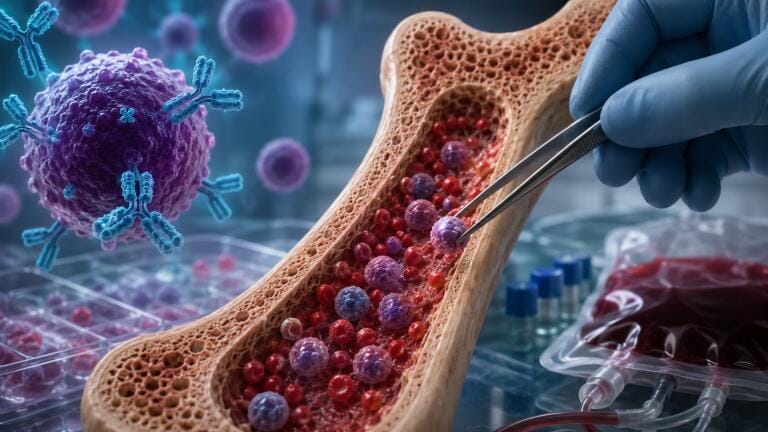
Stem cell transplantation – also known as bone marrow transplantation – and gene therapy are among the most powerful curative approaches for serious blood diseases, including sickle cell disease, beta-thalassaemia, immune deficiencies and some blood cancers. They aim either to replace a patient’s blood-forming stem cells or to correct them so they can produce healthy blood cells, offering long-lasting benefit and, for some patients, a cure.
The main obstacle has been the ‘conditioning treatment’ required before transplantation where patients usually need chemotherapy or radiation to clear their marrow space so that transplanted or genetically corrected haematopoietic stem cells can take hold. This can damage DNA, suppress immunity, harm fertility and strain frail patients.
In the recent study researchers described a way to replace broad, toxic conditioning with a more selective biological approach where antibodies which are designed to recognise markers on blood-forming stem cells, removing existing stem cells in a targeted way and create the space for therapeutic cells but with less collateral damage.
The approach had to solve a central problem in that an antibody that recognises a stem cell marker will usually bind to both the patient’s original stem cells and the therapeutic cells, preventing the latter from engrafting properly.
Dr. Pietro Genovese and colleagues addressed this by giving the therapeutic stem cells molecular protection. Using precise genome-editing tools, they altered an epitope on the surface of donor stem cells, blocking antibody binding while preserving the target protein’s normal function so providing a form of molecular camouflage.
The antibody could still recognise and remove unedited stem cells but the protected cells could evade attack, survive in the marrow and establish themselves at transplantation.
Protected stem cells survived antibody-based conditioning, engrafted in the bone marrow and increased gradually over time, suggesting the approach could give therapeutic cells a selective advantage, helping them reach levels high enough for clinical benefit.
The team combined this protective effect with therapeutic editing which was designed to increase the output of foetal haemoglobin – a protective form that can compensate for defective adult haemoglobin in sickle cell disease and beta-thalassaemia – reducing disease severity in both conditions.
“By avoiding chemotherapy, we can open up stem cell transplants for diseases that are less severe or for fragile patients normally too sick or too high risk for transplantation,” said Dr. Gabriele Casirati, an instructor in Genovese’s laboratory and first author of the study.
“Typically, bone marrow transplants are reserved for patients with life-threatening diseases but are simultaneously limited to those patients who can tolerate the chemotherapy,” he added.
Chemotherapy-free or chemotherapy-sparing conditioning could reduce the acute and long-term risks of treatment, particularly for patients who face serious complications from conventional conditioning. The antibody’s continued preference for protected stem cells could also help edited cells expand to therapeutically effective levels.
The significance may extend beyond inherited blood disorders. In previous work, the team used the same epitope-editing principle to protect healthy blood stem cells from potent cancer immunotherapies, including CAR T-cell therapies and therapeutic antibodies, while those treatments attacked leukaemia cells.
Together, the studies suggest epitope editing could become a flexible platform for blood medicine providing for safer transplantation and gene therapy in one application, and cancer immunotherapy that spares normal blood formation in another.
“Although this work is still preclinical, it points toward a future in which patients may receive curative stem cell therapies with less toxicity, less reliance on chemotherapy, and greater precision,” said Genovese.
“By combining targeted biological conditioning with molecularly protected therapeutic stem cells, this strategy offers a new framework for safer and more accessible treatments for a wide range of blood diseases,” he explained.
For further reading please visit: 10.1038/s41586-026-10737-8
ILM 51.6 Sept 2026



 Product directory




















,-photo-Karin-Allander.jpg)







.jpg)
