Research news
A Korean research team has developed a temperature-controlled platform to synthesise desired DNA sequences without repeated chemical reagent changes, and has demonstrated a power-free molecular recorder for cold-chain monitoring
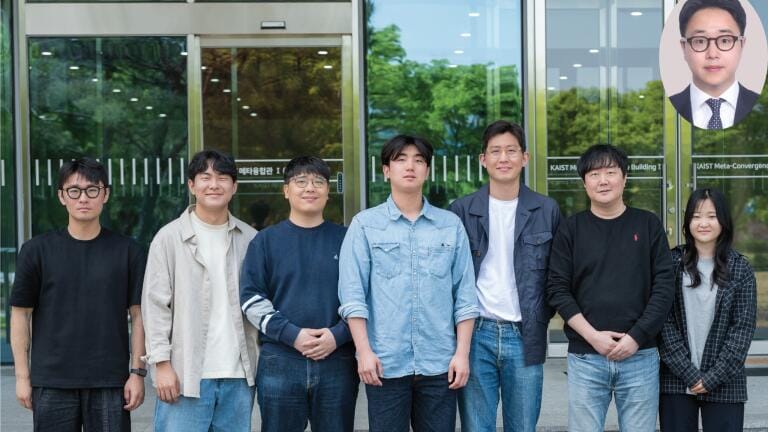
The Korea Advanced Institute of Science and Technology (KAIST), Daejeon, South Korea, has announced it has developed a temperature-controlled platform to synthesise desired DNA sequences, in work led by Professor Yeongjae Choi, of its Graduate School of Engineering Biology and a team led by Professor Hansol Choi, of the Department of Life Science at Ewha Womans University in Seoul, in collaboration with ATG Lifetech Inc.
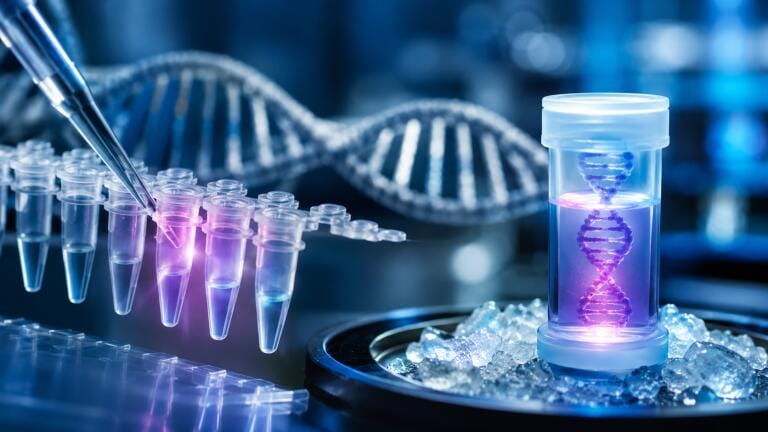
DNA carries the genetic information of humans and other living organisms, while custom-made DNA has become central to modern biotechnology. Researchers use synthetic DNA to diagnose disease, develop drugs, engineer microorganisms with useful functions and explore the basic mechanisms of life. Yet conventional DNA synthesis has remained dependent on repeated chemical steps. Each time one of the four DNA bases – adenine, thymine, guanine and cytosine – must be added, chemical reagents have typically been introduced and washed away in sequence.
This requirement makes automated DNA synthesis equipment high in cost and limits access to all but laboratories with the most specialised facilities. The KAIST-led team said its approach could simplify this process by replacing repeated reagent exchange with a controlled sequence of temperature changes.
The researchers developed ‘hairpin DNA’ molecules that respond only at specific temperatures. These structures remain folded, in a shape similar to a hairpin, until exposed to a defined temperature. Once that temperature is reached, the structure unfolds and can take part in a reaction. By placing several types of temperature-responsive hairpin DNA in a single test tube, the team was able to synthesise desired DNA sequences by altering only the temperature, step by step.
The method could allow DNA to be produced with general temperature-control equipment, rather than with large automated systems and complex reagent-handling workflows. If the platform can be developed further and scaled reliably, it could reduce the cost and time needed to produce DNA and lower barriers to entry in synthetic biology, genetic research, drug development and precision medicine.
To demonstrate a practical use for the technology, the team also created a power-free ‘DNA temperature black box’ designed to record temperature changes during transport. The device is stored in a freeze-dried state and begins to operate when a single drop of water is added shortly before use.
Once activated, the system records temperature exposure directly into a DNA sequence. According to the researchers, it can capture when temperature changes occur, how long they last and the order in which they happen. The device can also change colour when exposed to temperatures above a defined threshold which would allow users to check for possible cold-chain failures by visual inspection.
The researchers said the technology could have potential for quality control in temperature-sensitive supply chains, including vaccines, biopharmaceuticals, cell therapies and fresh foods. These products often depend on cold-chain distribution, where even short periods outside the required temperature range can affect safety, potency or commercial value.
By combining temperature-controlled DNA synthesis with a molecular recording system, the work points to a possible route towards simpler DNA manufacturing and low-power biological monitoring devices. Further development will be needed to establish how robust the method is outside controlled laboratory conditions, how precisely it can synthesise longer sequences and how readily it can be adopted by industry.
For further reading please visit: 10.1038/s41467-026-74890-4
ILM 51.6 Sept 2026



 Product directory




















,-photo-Karin-Allander.jpg)






.jpg)
