Research news
A perspective article in Biocontaminant has proposed a three-part framework to explain how bacteriophages can destroy, protect, or stabilise antibiotic-resistant bacteria, with potential implications for antimicrobial resistance control under the World Health Organization’s One Health approach
A recent perspective article in Biocontaminant has proposed a three-part evolutionary framework to help scientists to use bacteriophages more effectively against antimicrobial resistance (AMR).
AMR is among one of the most serious threats to global health. It occurs when bacteria, viruses, fungi, or parasites no longer respond as expected to medicines designed to control them. In bacterial infections, the spread of resistance can make standard antibiotics less effective, prolong illness, increase treatment costs and raise the risk of death.
As more bacterial pathogens have acquired resistance to existing antibiotics, researchers have sought alternative ways to control infection while preserving beneficial microbial communities. One option that has attracted renewed scientific interest is bacteriophage therapy.
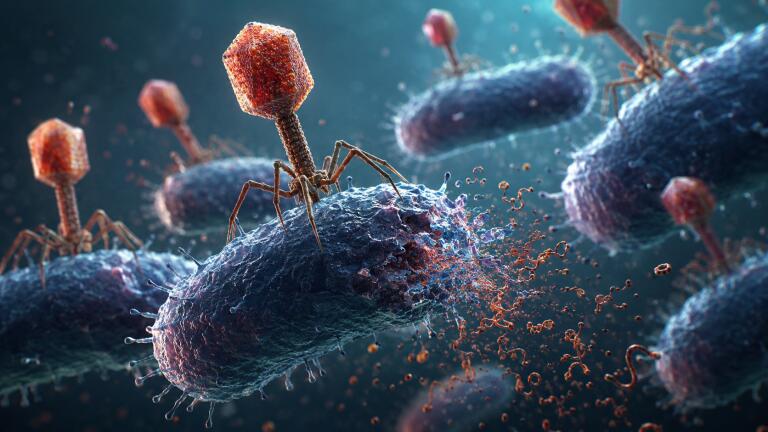
Bacteriophages – often called phages – are viruses that can naturally infect bacteria. Some can kill bacterial cells with high specificity which means they may offer a way to target harmful bacteria without the broader disruption associated with many antibiotics.
The recent article argues – however – that phages should not be regarded simply as bacterial predators. Instead, the authors proposed a phage–host evolutionary triad to explain how phages can destroy antibiotic-resistant bacteria in some circumstances, protect them in others and respond to environmental pressures that determine which of these outcomes is more likely.
“Phages should not be [solely] viewed … as weapons against bacteria,” said Dr. Junya Zhang, who is an associate professor at the Research Center for Eco-Environmental Sciences, Chinese Academy of Sciences in Beijing, China and corresponding author.
“They are also genetic engineers, metabolic partners, and ecological regulators. Understanding these roles may help us design smarter strategies to control AMR,” he added.
The framework described three evolutionary states:
The authors argued that this evolutionary perspective could help to guide future AMR control within the One Health framework, which links human, animal and environmental health.
In engineered environments, such as wastewater treatment plants, it may one day be possible to adjust ecological conditions in ways that push phage–host relationships towards the destruction of resistant bacteria.
In natural environments, including soils and rivers, any use of these principles would require careful surveillance because interventions could have unintended ecological consequences, possibly severe.
“The goal is not simply to release phages but to steer phage-host evolution in the right direction,” Zhang said.
“By learning how to shift phages from protection to targeted killing, we may open new pathways for reducing the global spread of AMR,” he explained.
The article presents bacteriophages not only as potential therapeutic agents but also as active participants in microbial evolution. Its central message is that phage-based AMR control will depend less on the presence of phages alone than on a precise understanding of their genetic, metabolic and ecological roles.
For further reading please visit: 10.48130/biocontam-0026-0003
ILM 51.6 Sept 2026



 Product directory


.jpg)
.jpg)















,-photo-Karin-Allander.jpg)