Research news
Researchers at Loughborough University have developed a three-dimensional model of the breast cancer microenvironment that is providing new insights into how exercise may help counteract the cancer-promoting effects of fat cells. The research uses advanced 3D cell culture techniques together with bioluminescence-based viability assays to study interactions that cannot be replicated using conventional two-dimensional cell cultures.
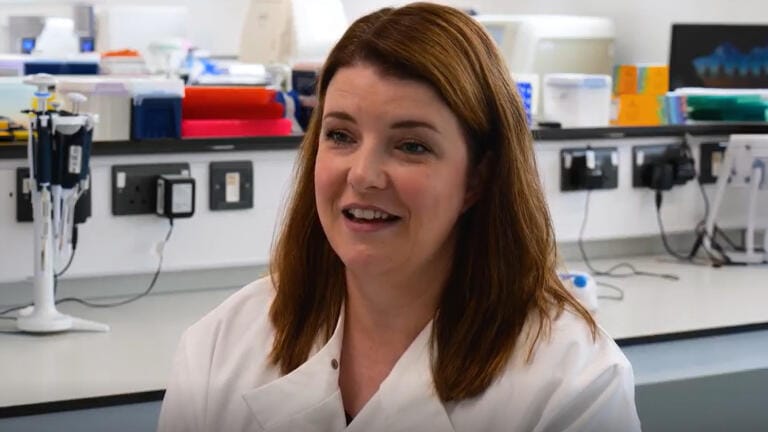
Led by Dr Mhairi Morris, Reader in Exercise Oncology in the University's School of Sport, Exercise and Health Sciences, the team created a model incorporating visceral and subcutaneous fat cells to investigate whether different types of fat influence tumour behaviour and the response to exercise.
"3D models are much more representative of what's happening in vivo than 2D models. When you grow cells in 2D, they only interact side by side, but in 3D cultures they can interact in all dimensions," said Dr Morris.
The model enables researchers to investigate how interactions between cancer cells and surrounding fat cells influence tumour behaviour.
Early findings indicate that breast cancer cell viability increases when tumour cells are cultured alongside fat cells. However, introducing exercise into the model appears to reverse this effect, suggesting physical activity may help offset some of the tumour-promoting influence of fat cells.
"What we're finding is that exercise may help negate some of the negative effects that fat cells have on cancer within the tumour microenvironment," said Dr Morris.
The team is now investigating the molecular mechanisms behind this response.
To generate reliable measurements within the complex 3D cultures, the researchers used Promega's CellTiter-Glo® 3D Cell Viability Assay, enabling rapid and reproducible assessment of cell viability directly within matrix-embedded cultures.
The team believes the model will provide a valuable platform for investigating how exercise influences cancer biology while supporting the development of more physiologically relevant approaches to cancer research.
More information online
ILM 51.6 Sept 2026



 Product directory




















,-photo-Karin-Allander.jpg)





.jpg)
