Microscopy & microtechniques
Published over 7 years ago. See the latest and most current information on Microscopy & microtechniques.
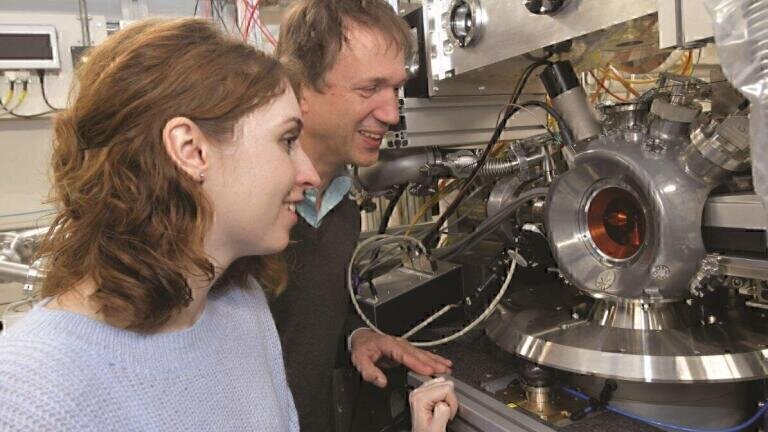
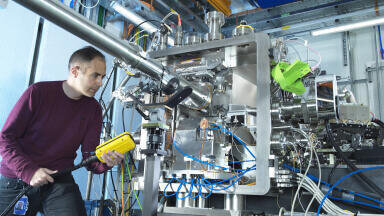
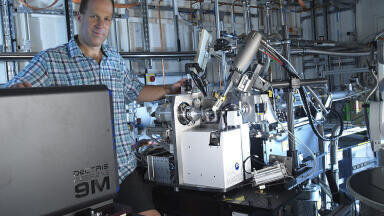
When the doors opened to Diamond Light Source’s newest beamline (the 32nd operational beamline at the UK’s national synchrotron), Dr Ivo Tews’ group from Biological Sciences at the University of Southampton were fi rst in the queue to use it. They are researching photosynthetic or cyanobacteria, to find out more about how these phytoplankton thrive in nutrient-poor waters. Their project is embedded with work at the National Oceanography Centre at Southampton to understand the efficiency of the bacterial metabolism and of nutrient uptake. The team have taken Prochlorococcus samples from deep in the ocean, over 5,000 metres below the surface and acquired samples from particularly nutrient-poor regions of the world’s oceans in order to study microorganism adaptation.
As PhD student Rachel Bolton explained, "The ocean bacteria Prochlorococcus dominates areas of the ocean in which nutrients are scarce and these cover 30% of Earth’s surface. Prochlorococcus is the most abundant bacteria in the ocean that performs photosynthesis and is responsible for the removal of approximately four gigatons of carbon a year. This fi gure is comparable to the amount of carbon produced by the world’s agriculture industry, highlighting the importance of these bacteria in global biogeochemical cycles. Understanding more about how these bacteria work could help with biotechnology and
the production of biofuels."
ILM 51.6 Sept 2026


 Product directory


.jpg)
.jpg)









.jpg)

.jpg)