Blood
Published over 14 years ago. See the latest and most current information on Blood.
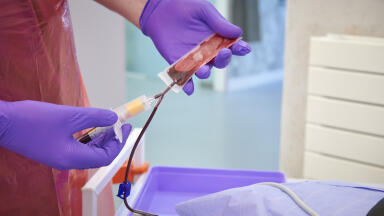
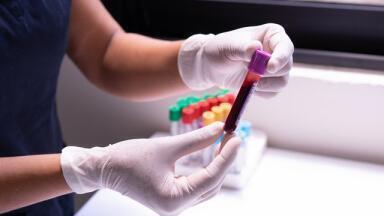
The University Hospitals Birmingham NHS Foundation Trust (UHB) has found that educational programmes concentrating on correct blood culture technique, supported by bioMérieux, play a key role in reducing contamination rates. Pauline Jumaa, Consultant Microbiologist and Director of Infection Prevention Control at UHB’s Queen Elizabeth Hospital Birmingham, explained: “Although blood culture contamination will never be completely eliminated because human skin cannot be sterilised, we felt that improved education could significantly make a difference. Based on published findings, we target areas of particularly high risk to look at contamination rates.”
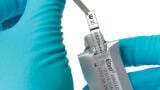
“We initially focused on contamination rates in Accident and Emergency and General Medicine, concentrating on education to tighten up correct blood culture procedures. We had recently installed a BacT/ALERT® 3D blood culture system, and bioMérieux supported this with education programmes on sampling technique. Although anyone taking blood cultures now receives this training, it focuses predominantly on junior doctors, since they perform the vast majority of blood cultures within UHB.”
Pauline concluded: “A contaminated blood culture may result in a patient receiving unnecessary investigations or the wrong treatment potentially affecting their recovery, and incurs a great deal of avoidable expense. By expanding our educational programme for blood culture collection so that everybody knows the correct procedures and uses the right equipment, we have observed an estimated decrease in contamination rates of up to 20% in the patient groups studied.”
ILM 51.6 Sept 2026




 Product directory