COVER SQUARE + logo (large).jpg)
Chromatography
Published over 9 years ago. See the latest and most current information on Chromatography.
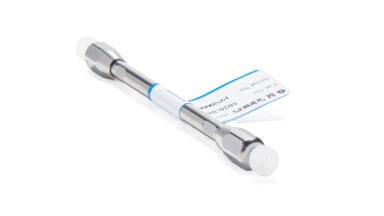
Three novel HILIC phases were unveiled by Advanced Chromatography Technologies Limited at HPLC 2017, Prague. These proprietary phases enable chromatographers to achieve reproducible and successful HILIC separations via a systematic approach to method development. The three phases comprise of an acidic character phase (ACE HILIC-A), a basic character phase (ACE HILIC-B) and a neutral character phase (ACE HILIC-N); each phase offering alternative selectivity.
Competitively priced HILIC Method Development kits are also available, offering all three selectivities for the same price as just a single column. Three particle sizes (1.7, 3 and 5 micron) will be available at launch together with a brochure, application notes, technical knowledge notes and method development guidelines. The range, unveiled at HPLC 2017 Prague, was officially launched on 1st July 2017.
For further information on any ACE product contact us or click here.
ILM 51.6 Sept 2026





 Product directory