Chromatography
Published over 14 years ago. See the latest and most current information on Chromatography.
“Good value and excellent performance is a combination that will warm the heart of any academic polymer scientist,” said Professor Kenneth J Wynne of the Department of Chemical and Life Science Engineering at Virginia Commonwealth University, when asked about his 11-year use of Viscotek gel permeation chromatography (GPC) systems from Malvern Instruments.
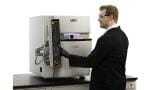
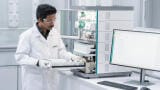
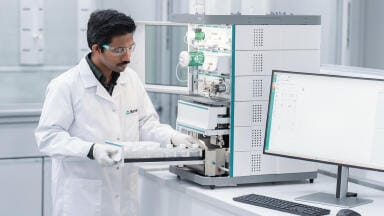
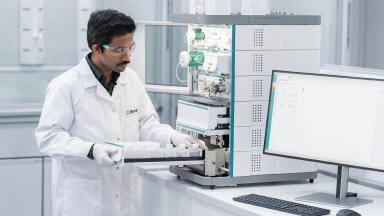
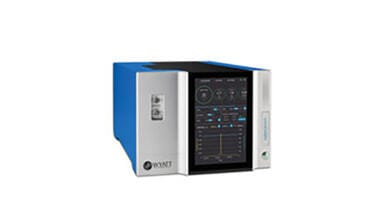
Professor Wynne’s research team uses the Viscotek TDAmax triple detection system to carry out routine GPC when developing and applying novel surface modifications to polyurethanes and other polymers.
Professor Kenneth J Wynne said: “The Viscotek TDAmax is extremely valuable because in our work on polymers we perform some syntheses which can lead to large molecules with two drastically different structures. GPC is critical in delineating the amounts of each structure and the Viscotek system we use employs quadruple detection that includes refractive index (RI), light scattering at both 90 degrees and low angle (LALS), and viscosity detectors. We use two fractionation columns in series that are carefully selected to effect good separation for low molecular weight species. Malvern supplies these columns too.”
“When I came to Virginia Commonwealth University to set up a new laboratory in polymer science more than a decade ago, I contacted two instrument suppliers,” explained Professor Wynne. “However, right from the beginning the Viscotek system worked really well, we were given an attractive offer, which was supported by a customer services department that made it a priority to help a faculty that was just starting out.. It was therefore an easy choice and one which I can look back on 11 years later with the knowledge that it was the correct one.”
Professor Wynne’s research is supported by the National Science Foundation, the Office of Naval Research and the VCU School of Engineering Foundation. As well as research into coatings that resist
fouling in the marine environment, he and his research team work with very unusual ‘soft blocks’ called polyoxetanes. These modify the surface of polyurethanes to produce antimicrobial coatings that
kill bacteria on contact without releasing toxins. The resulting polyurethane molecules can be used in biomedical applications for wound care or in vivo medical devices.
ILM 51.6 Sept 2026

 Product directory