Chromatography
Published over 15 years ago. See the latest and most current information on Chromatography.
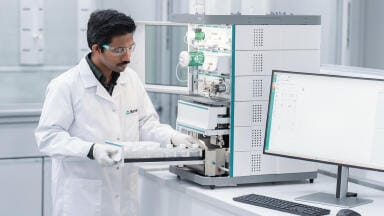
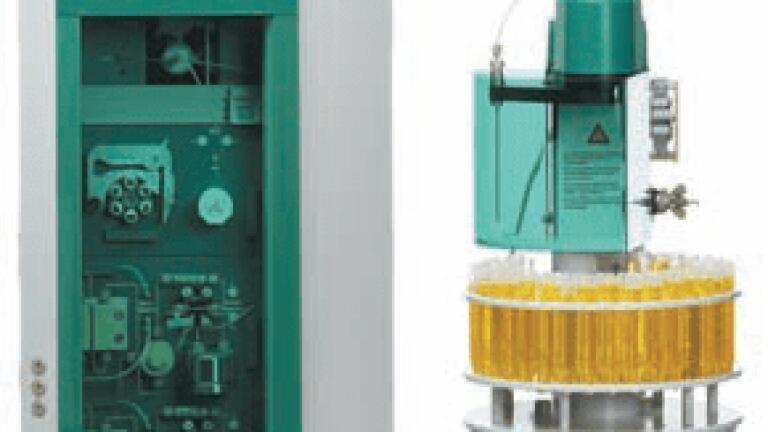
Metrohm is pleased to present a method for the rapid, reliable, and sensitive analysis of free and complexed gadolinium and iodine-containing compounds in aqueous matrices by ion chromatography (IC) and inductively coupled plasma mass spectrometry (ICP/MS). The method proceeds without costly sample preparation and provides substantial information on the entry, degradation, and fate of contrast agents in (waste)water. Biologically inert iodinated X-ray contrast media (ICM) and gadolinium chelates are used as contrast agents diagnostic radiology. These contrast media are applied extensively and are excreted in unmetabolized form via urine into wastewater. ICMs are suspected to be nondegradable in most conventional water treatment plants and ultimately accumulate in drinking water. As their effects on the environment are still unknown, they are removed by water treatment technologies using either ozonation or floculation. Ozonation gives origin to a range of unidentified iodine-containing ozonation by-products (OBPs) of unknown toxicity. Similarly, the addition of competitive Fe3+ ions in the flocculation step enhances the
displacement of gadolinium from its chelate complexes, which gives origin to highly toxic Gd3+ ions. In laboratory studies, the effects of ozonation and flocculation were evaluated, respectively, for iodine-containing (e.g., Iomeprol, Amidotrizoic Acid) and gadolinium-containing (e.g., Gadovist®, Magnevist®) contrast media.
ILM 51.6 Sept 2026

 Product directory