Chromatography
Published over 16 years ago. See the latest and most current information on Chromatography.
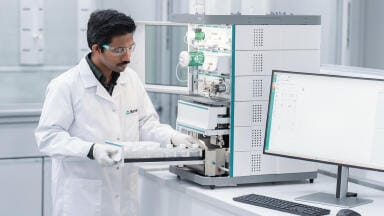
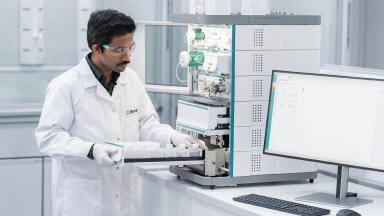
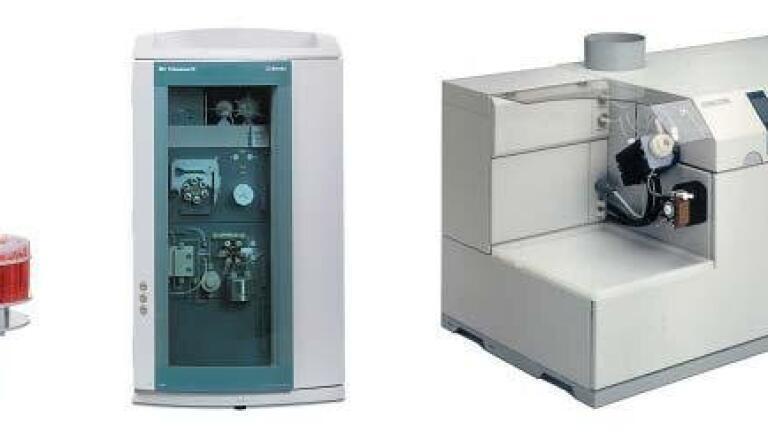
Coupling ion chromatography to an inductively coupled plasma mass spectrometer (IC-ICP/MS) is a powerful tool to determine different species organic and inorganic compounds unambiguously in one single run. However, during sample preparation, some of these species undergo interconversion. These interconversions can be reliably monitored using speciated isotope dilution mass spectrometry (SIDMS), a method recently described in EPA method 6800.
Depending on the pH and the redox potential, chromium, for example, can interconvert bi-directionally between Cr3+ and the highly toxic and carcinogenic Cr6+. Similarly, mercury tends to undergo various transformations when released into the environment. It is found in several forms, particularly as elemental mercury (Hg0), inorganic mercury (Hg2+) and biologically active organic mercury (methylmercury CH3Hg+).
By introducing enriched isotopic species spikes into the analytical process, one can correct for and measure those interconversions to derive true concentrations of the species. While arsenic compounds can be analysed without applying SIDMS, several commonly used extraction techniques used for mercury speciation in biological samples (e.g. tuna fish tissue as in EPA 6800) are evaluated by applying both SIDMS and external calibration. Metrohm.
ILM 51.6 Sept 2026

 Product directory