Detectors
Published over 3 years ago. See the latest and most current information on Detectors.
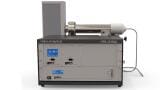
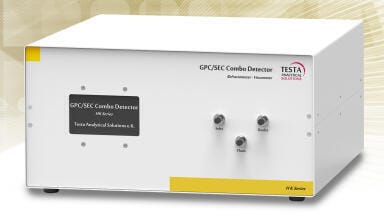
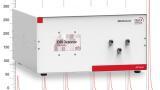
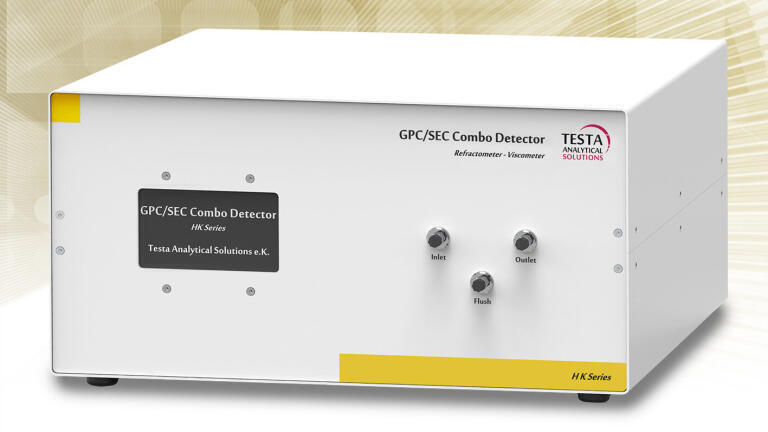
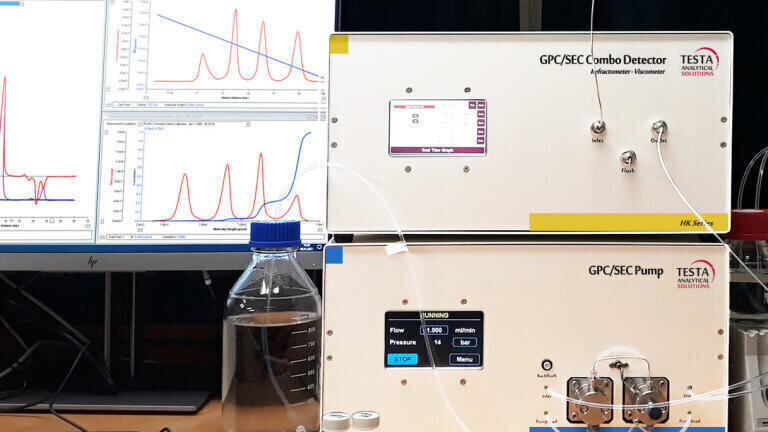
Testa Analytical has redefined the standards for demanding GPC/SEC applications, particularly in the study of polymer structure and branching, with the COMBO-ONE Viscometer/DRI detector.
Traditional viscometry detectors in GPC/SEC, employing a configuration resembling a Wheatstone bridge with four matched capillary tubes, have been in use for many years but suffer from operational and performance limitations.
Carlo Dessy, the mind behind the COMBO-ONE, explained: “Our dual detector eliminates the fundamental drawback of traditional online viscometer design known as 'sample breakthrough' after each measurement. This innovation allows for much faster sample sequencing, effectively doubling the daily throughput of a GPC/SEC System. Additionally, it significantly reduces solvent and waste production."
He continued: "Another advantage of our COMBO-ONE detector is its exceptional sensitivity and resolution. Since our differential refractometer is integrated into the viscometer, both concentration and viscosity are measured simultaneously on the same sample segment. This high sensitivity and resolution are crucial when pursuing branching calculations and structural investigations in GPC/SEC analysis."
The COMBO-ONE Viscometer/DRI detector is fully compatible with all modern GPC/SEC systems.
More information online
Lab Asia 33.6 Dec




 Product directory