HPLC
Published over 4 years ago. See the latest and most current information on HPLC.
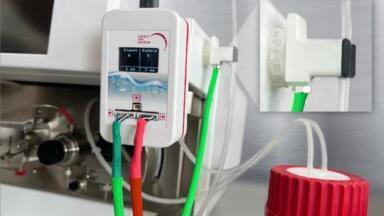
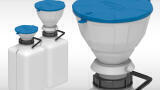
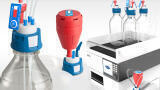
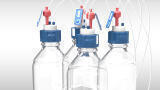
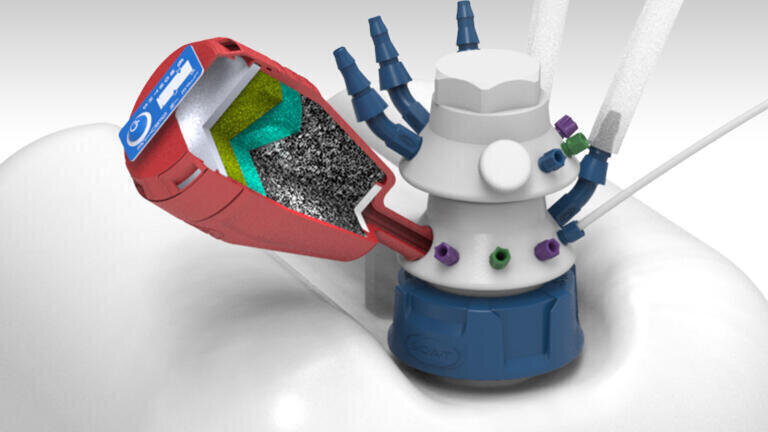
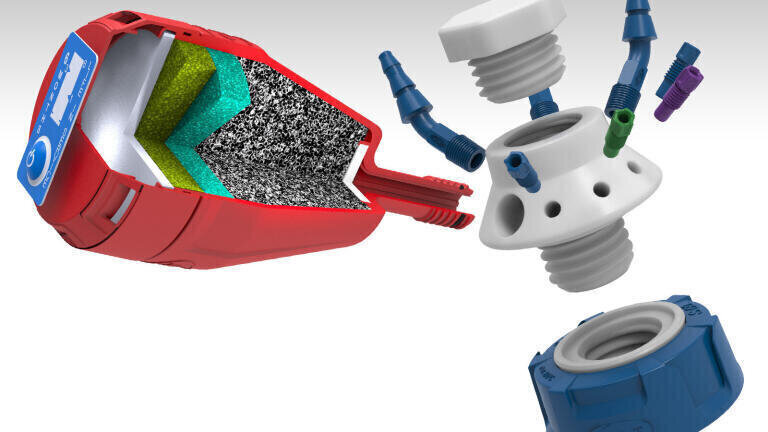
Discover the liquid safety solution of the future, and turn your waste container into a closed safety system! The modular Safety Waste Cap „LISA“ blocks chemical vapours with its 3-layered exhaust air filter. It connects safely to your HPLC waste lines, and provides safe disposal of chemicals like solvents, acids and alkalis. It comes with multiple connectors for many tubing sizes, and is available for different containers and thread types.
The Safety Waste Cap is made of chemically resistant materials (PTFE and PE-HD) for use with all common chemicals used in analytical labs. The modular system is extendable with accessory 'Satellites' for additional connections and applications.
In order to block hazardous vapours and avoid overpressure inside the container, the Safety Waste Cap LISA works perfectly with the original 3-layered SCAT exhaust air filters. The filters contain 3 types of activated carbon, optimised for catching vapours of solvents, acids and alkalis.
The screw cap is freely rotatable and prevents your HPLC tubing from twisting when changing the container. Due to the variety of included connectors for different tubing sizes, LISA fits every HPLC / UHPLC system. To keep the system safely closed, it comes with blind plugs for every connection port.
For use in explosion-protected zones, electrically conductive versions are available. They provide a grounding connection for antistatic protection, and are designed for use with electroconductive containers.
ILM 51.6 Sept 2026





 Product directory