Laboratory products
Published over 9 years ago. See the latest and most current information on Laboratory products.
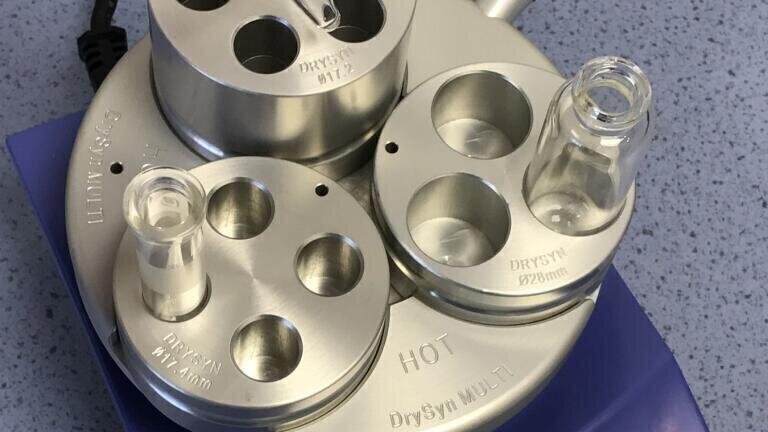
Asynt has announced new inserts for its DrySyn heating blocks enabling scientists to now conduct precise temperature controlled, stirred experiments in 0.5-2ml tapered, 2-5ml and 10-20ml microwave vials.
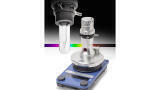
Available as an option for the DrySyn Parallel Synthesis Kit the new microwave vial inserts allow you to heat and stir up to 27 small scale reactions in parallel using any standard hotplate.
The DrySyn Parallel Synthesis kit enables clean, safe synthesis without the hazards or problems associated with silicon oil baths or heating mantles. With no messy oil, heat resistant handles, and a wide selection of simple-to-configure reaction inserts - DrySyn is the heating block system of choice for thousands of labs around the world. Offering better heating rates than an oil bath there is no need to change your chemistry either.
Durably constructed from chemically resistant, anodised aluminium, DrySyn heating blocks offer excellent heating performance to over 300ºC and can heat a reaction 25 per cent faster than an oil bath. DrySyn heating blocks also offer a flexible, safe alternative to using heating mantles.
For further information on the comprehensive range of reaction formats compatible with DrySyn Parallel Synthesis kit please visit www.asynt.com/product/drysyn-reaction-vial-inserts/.
Lab Asia 33.6 Dec

 Product directory