Laboratory products
Published over 13 years ago. See the latest and most current information on Laboratory products.
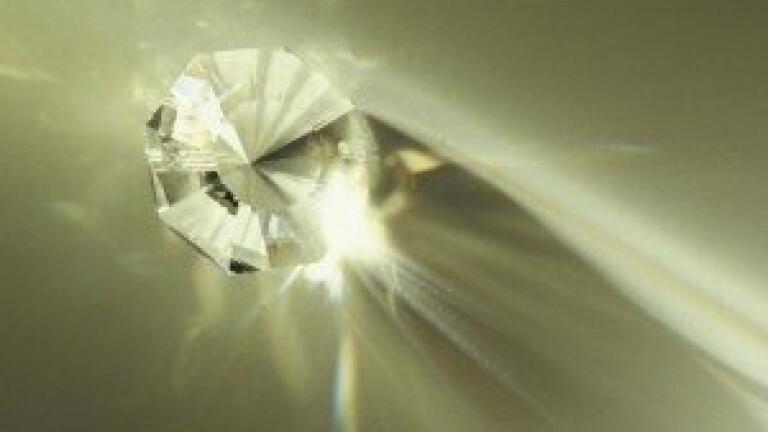
Laboratory grown diamonds could be a 'conflict-free' way of trading the precious gem, the Financial Times has reported, with the lab-made rock finding increasing acceptance in the high-end jewellery world.
Melissa Salas, director of marketing for Buy.com, has told the FT that the new technique is proving a success among consumers. She said: "A key selling point is that lab-grown diamonds are 'conflict-free'. Plus, they are diamonds, not to be confused with diamond-like substances."
This is not a new method, and diamonds made in laboratories have the same chemical composition as geologically-created diamonds. But they are finding increased acceptance in the consumer world, as the public becomes more aware about the corrupt and often deadly nature of the diamond trade.
In labs, diamonds are being produced either through high-pressure high-temperature situations, a process called HPHT, or through chemical vapour deposition (CVD), by which the stones are grown from a hydrocarbon gas mixture, FT's Syl Tang explains.
After years of research, The De Beers Diamond Research Laboratory has grown stones of 25 carats, but found that the lengthy procedure makes it rather unsustainable. Therefore, the stones are usually grown to only 1 to 1.5 carats, with one brand in particular poised to take advantage.
Gemesis, a 16-year-old company, based in Lakewood Ranch, Florida, has launched several thousand styles of lab-created diamonds. This is a reputable company, certified by the International Gemological Institute, which shows that there is certainly a future for lab-made diamonds.
Stephen Lux, chief executive of Gemesis, said: "Last year, we had a significant breakthrough in making colourless diamonds.
"Also, while the fashion world has one view of things, the largest selling diamond size is about one-carat, typically for an engagement ring.
"At that size, you can save between 25 and 50 per cent when buying a laboratory-created diamond."
Posted by Neil Clark
Lab Asia 33.2 April

 Product directory