Research news
A pilot study has suggested that intense physical exercise may mobilise a smaller but more targeted population of blood stem cells than granulocyte colony-stimulating factor, the standard drug used before donation
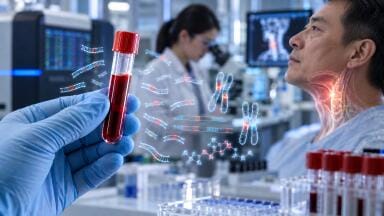
A recent study from the University of Basel, Switzerland, has suggested that intense physical exercise could help to support blood stem cell donation by mobilising a distinct population of cells that may be relevant to successful transplantation.
Blood stem cell donation can help to save the lives of people with leukaemia and other disorders of the blood and immune system. Blood stem cells, which reside mainly in the bone marrow, continually produce red blood cells, white blood cells and platelets. When this system becomes diseased, a transplant from a compatible donor can offer patients a chance of long-term remission or cure.
Before donation, donors usually receive granulocyte colony-stimulating factor(G-CSF). This drug prompts blood stem cells to leave the bone marrow and enter the bloodstream, from which they can then be collected by apheresis. Although the approach is well established, treatment with G-CSF can cause side effects, most notably bone pain. In some donors, the number of cells collected can also prove insufficient, which can require additional treatment cycles or medication.
Researchers have previously shown that intense physical exercise can also cause blood stem cells to enter the circulation. Unlike additional drug treatment, exercise is generally regarded as low risk for healthy people.
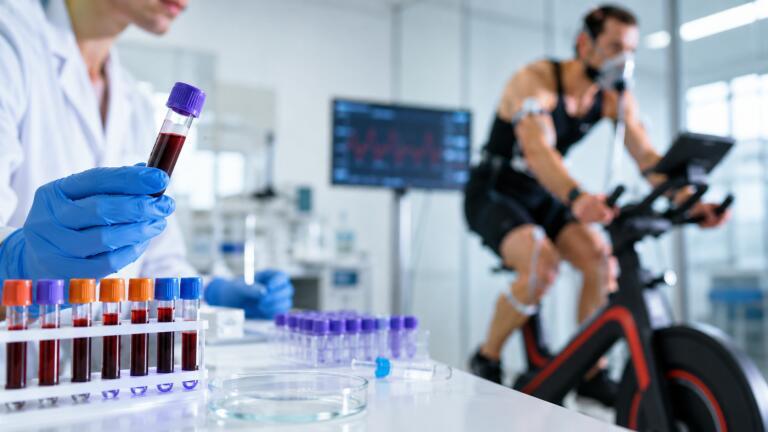
Dr Julia Kröpfl and her team from the Department of Sport, Exercise and Health at the University of Basel therefore examined whether this effect could have relevance for stem cell donation. The pilot study directly compared, in the same donors, how acute physical exercise and G-CSF mobilised blood stem cells.
The research was conducted in collaboration with Professor Andreas Holbro, senior physician at Blood Donation Northwest Switzerland and the Department of Haematology at University Hospital Basel. The team recruited seven male and three female donors who were due to donate blood stem cells to family members. Participants first completed an intensive session on a cycle ergometer, with blood samples taken before and after the exercise. Several days later, they underwent conventional mobilisation treatment with G-CSF.
The direct comparison showed clear differences in both the quantity and composition of the blood stem cells released into the circulation. Previous studies have indicated that an intense exercise bout can raise blood stem cell numbers within minutes, before levels rapidly decline. G-CSF, by contrast, takes several days to increase blood stem cell levels in the bloodstream.
Exercise produced a much smaller rise in total blood stem cell numbers than drug treatment. The acute exercise stimulus increased stem cell numbers only moderately, to about one-and-a-half to two times baseline levels. G-CSF increased blood stem cell levels by about 20-fold to 50-fold.
“The effect of acute physical exercise is small but it is more targeted in terms of the composition of the mobilised cells,” Kröpfl said.
G-CSF appeared to release blood stem cell subtypes in a relatively non-specific manner. Intense physical exercise, by contrast, preferentially dislodged cell populations that are considered potentially favourable for transplantation. These included platelet precursor cells and less mature blood stem cells. Such early-stage cells are thought to have a strong capacity to establish themselves in the recipient’s body, although the clinical implications for patients remain uncertain.
The researchers said previous analyses suggested that acute physical exercise mainly mobilised blood stem cells that adhere to blood vessel walls, probably as a result of increased blood flow. This mechanism could help to explain why exercise produced a rapid but short-lived effect while G-CSF required several days to act.
“[It seems] physical exercise cannot replace G-CSF treatment for stem cell donation, but it could potentially complement it. The combination of both approaches would be promising,” Kröpfl said.
The rationale is that G-CSF releases stem cells from the bone marrow, while physical exercise could additionally mobilise cells attached to blood vessel walls. In theory, the two approaches could therefore act through different biological mechanisms and might enhance the quality or yield of cells collected for transplantation.
The authors cautioned that the study was small and provides only preliminary evidence. Further research will be needed to determine whether exercise can improve stem cell collection in practice, whether it changes transplant outcomes and whether it can be used safely alongside G-CSF.
Kröpfl said a study that combined G-CSF with cycle exercise could not currently take place in Switzerland for ethical reasons because it remains unclear whether exercise might worsen side effects or increase the risk of complications during stem cell collection.
“However, it is entirely possible that exercise could actually alleviate these side effects, as has also been observed in patients undergoing chemotherapy,” the molecular biologist said.
For further reading please visit: 10.1007/s00421-026-06224-7
ILM 51.6 Sept 2026



 Product directory












,-photo-Karin-Allander.jpg)



.jpg)
