Laboratory information management systems (LIMS) which operate over optical networks could work even faster in the future with the development of electrical components controlled by light.
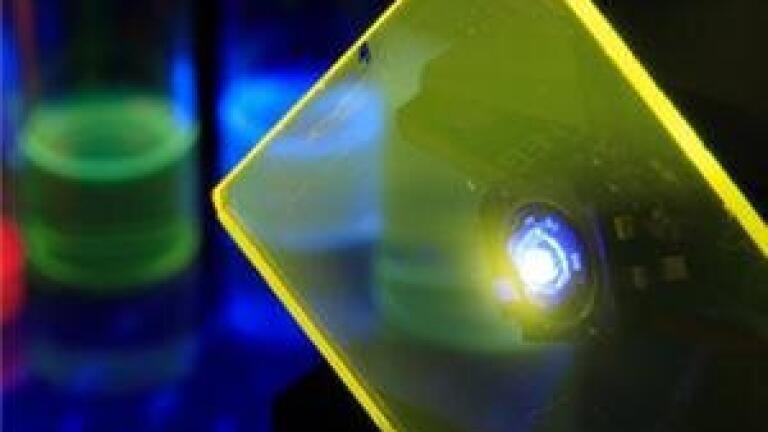
Scientists at the Ecole Polytechnique Federale de Lausanne (EPFL) claim to have created a transistor which not only produces a light-based output, but is also controlled by the beam from a laser.
The microscopic glass component could have applications in the kinds of data processing used in LIMS, for example by storing information over a short period of time.
Its discovery was overseen by Professor Tobias Kippenberg, a team leader at the Max Planck Institute of Quantum Optics and tenure track assistant professor at EPFL.
The tiny component works by vibrating rapidly - around 10,000 times as fast as a wine glass - while the glass structure guides incoming light around a circular path.
When a strong beam enters the interior, the cavity is deformed and the light passing through the microresonator can be released - effectively creating an on-off switch for the signal.



 Product directory



























.jpg)
