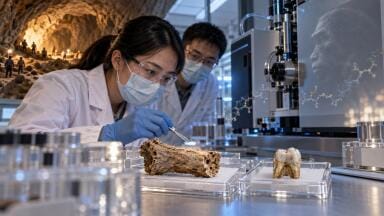
Microscopy has been used by researchers at the University of Western Australia (UWA) to examine DNA located in fossilised egg shells.
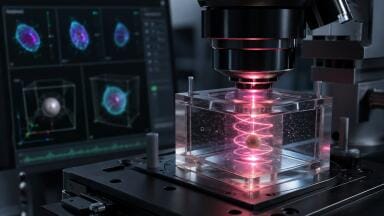
Scientists utilised a ultra-violet confocal microscope to study the remains of the extinct elephant bird, different species of moas, emus, owls and dabbling ducks.
A nucleic acid stain was applied to the fossils before being imaged by the lab equipment and associate professor Paul Rigby confirmed some samples were over 19,000 years old.
Published in Proceedings of the Royal Society B, the analysis was only possible due to fossilised eggshells containing 125 times less bacterial load than bones.
According to the UWA, the eggshell structure also retains much of its organic components intact, making it "highly suitable" for experiments.
Earlier this month, a research team from the academic institution said clues in fossils from the Great Dying - an event 251 million years ago that saw the death of many creatures - could help experts to judge present-day climate changes.






 Product directory