News
Published over 10 years ago. See the latest and most current information on News.
Despite the fact that man has stepped foot on the moon, the fact remains that humans simply aren’t cut out for life in outer space. Of course, that hasn’t stopped NASA and other space agencies from sending astronauts into orbit. While there is a plethora of precautionary measures in place, space travel does have a marked effect on the body.
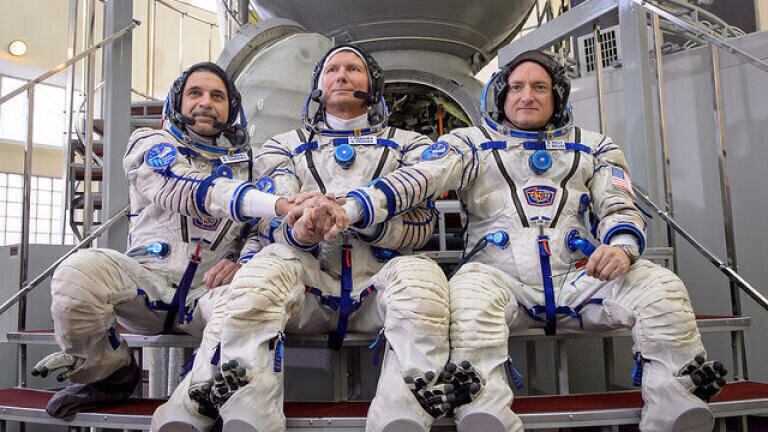
In a recent interview, NASA astronaut Scott Kelly revealed his experience of enduring 340 days in space. Together, he and fellow Russian astronaut Mikhail Kornienko spent almost a year on the International Space Station, as part of a study exploring the effects of weightlessness, radiation and compact quarters that go hand in hand with space travel. This is what they found…
Research has shown that prolonged exposure to reduced gravity environments can trigger the loss of bone minerals, as well as increase the chances of post mission fractures and renal stones.
In the same way that reduced gravity environments weaken bones, they also cause muscles to shrink. This can leave astronauts feeling weak, and less coordinated.
The cardiovascular system is far less functional in outer space than it is on planet Earth. This has sparked concerns for astronaut health and performance, particularly during extended missions.
Adapting to the space flight experience and readapting to gravity upon landing can confuse sensory motor functionality. This can have an adverse effect on the motor skills of astronauts, and their ability to control vehicles.
When astronauts leave the safety of the Earth’s atmosphere they are no longer protected by multilayered gasses. This puts the crew at the mercy of radiation sickness, as well as long term effects such as cancer, central nervous system malfunction and degenerative diseases.
During exploration flights astronauts can experience spaceflight associated immune dysregulation. This is caused by several factors, including high energy radiation. This could increase vulnerability to cancer, autoimmune diseases, hypersensitivity and other infectious illnesses.
NASA has channelled a huge amount of capital into researching the physical and psychological effects of space travel, and hopes to use the results as part of its strategy to launch an eventual mission to Mars, and manage the severe strains of life in space.
Before developing health and safety precautions for astronauts, the groundwork needs to be completed here on Earth. For more information into the latest medical developments, ‘A New Tool in the Clinical Management of Sepsis’ is a fascinating read. It explores the common and potentially life-threatening condition, and how the ‘sepsis six’ toolkit is being used to detail immediate actions that should be taken within the first 60 minutes of a ‘red flag sepsis’ event.
Image via Flickr Creative Commons. Photo credits: NASA HQ Photo
Lab Asia 33.4 - August 2026

 Product directory