News
Published over 11 years ago. See the latest and most current information on News.
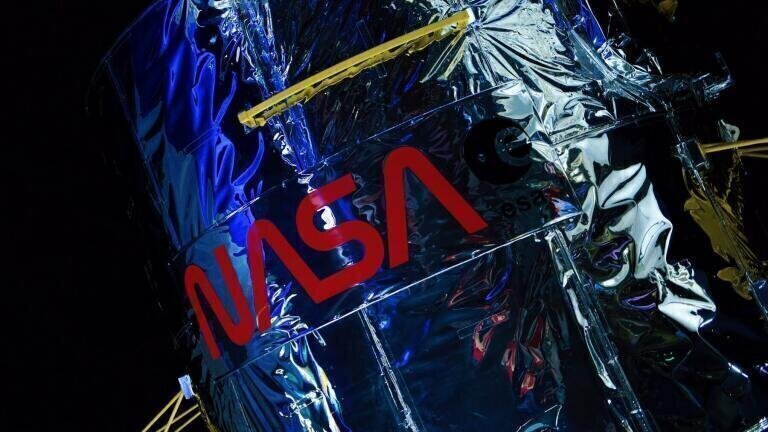
For centuries humans have gazed up at the sky towards Pluto, a trans-Neptunian object that’s situated around 4.8 billion kilometres from Earth. Even with the power of the Hubble space telescope the dwarf planet has remained a miniscule, pixelated spot. That is until now. NASA has just unveiled a state-of-the-art spacecraft that’s got its sights set on Pluto, and is currently travelling at a speed of 5,100km per hour. Named New Horizons, the robotic probe weights half a tonne and is equipped with cutting edge cameras and technical equipment.
The next generation craft is the fastest spaceship ever launched from planet Earth however its speed could also be its downfall. Even a collision with something as tiny as a grain of rice could throw the spaceship off course or disable it completely. Of course, NASA scientists have taken every precaution in the book to ensure that the mission is a success, with Alan Stern, principal investigator and head of the New Horizons mission admitting that “My biggest worry is something we haven’t thought of.”
Stern and his team are unsurprisingly excited about the project, stressing to The Guardian that “This is a moment. People should watch it. They should sit their freakin’ kids down and say, think about this technology. Think about people who worked on this for 25 years to bring this knowledge… It’s a long way to go to the outer edge, the very edge of the solar system.”
One of the most exciting new developments on the horizon is the potential of discovering life on one of Pluto’s five moons. Charon, the largest moon is half of the dwarf planet’s size and could once have housed a warm ocean capable of supporting alien life.
At its closest point New Horizons will cruise within 12,550km of Pluto’s surface. This should give the spacecraft’s long-range camera ample opportunity to snap detailed photographs of both the planet, and its moons. These will then be transmitted back to Earth, a journey that will take 4.5 hours, even at the speed of light. Already it’s detected mysterious surface patterns that indicate evidence of mountains, valleys and frozen methane lakes. According to NASA scientists the New Horizons mission will help uncover exciting new information on the origins of the solar system and the evolutionary developments that have occurred over millennia.
Of course, not all space expeditions go to plan. ‘The Role of Materials Degradation and Analysis in the Space shuttle Columbia Accident Investigation’ looks at one of the highest profile materials failure programmes ever launched, and how the disaster influenced future designs and construction techniques of NASA’s next generation of space vehicles.
Lab Asia 33.4 - August 2026



 Product directory