Research news
University of Malaga research has shown that a laboratory-based antiviral approach which combines structure-guided peptides with a mutagenic compound to disrupt Sars-CoV-2 replication, reduces infectivity and destabilises the virus’ genetic diversity
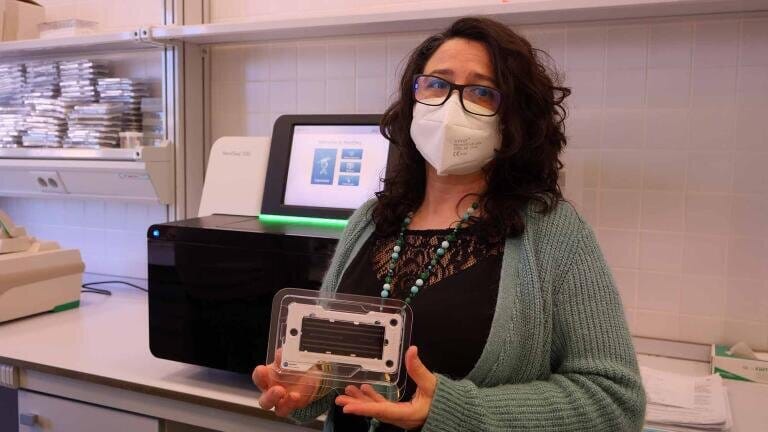
A research team at the University of Malaga in Spain, has proposed a novel antiviral strategy against the severe acute respiratory syndrome coronavirus 2 – the virus responsible for the COVID-19 pandemic – which combines two complementary mechanisms to attack the virus at the same time. The approach has been designed to impair viral replication while also forcing the virus towards genetic instability, thereby limiting its ability to adapt.
The study formed part of the doctoral thesis of Dr. Sergio Ortega del Campo, of the molecular and cellular biology programme at the University of Malaga (UoM). The researchers said the findings could support the development of more effective therapies against emerging viruses and could also help to counter more resistant coronavirus variants.
Dr. Ana Grande, professor in the department of cell biology, genetics and physiology at the UoM and one of the study’s principal authors, explained that the team combined two different antiviral pressures. First, the researchers designed small peptides – short protein fragments – to block key viral proteins involved in replication of the viral genetic material and also in immune evasion. Secondly, they used 5-fluorouracil, a compound that introduces errors during replication of the viral genome.
“Independently, both mechanisms reduce the virus’ ability to infect. However, when combined, they produce a much more powerful synergistic effect. While the peptides hinder replication, the compound increases the accumulation of mutations that leads the virus to a situation of ‘error catastrophe’, achieving near-complete loss of infectivity,” said Grande.
The concept of error catastrophe refers to a point at which a virus accumulates so many genetic errors that it can no longer maintain a viable population. In this study, the combined treatment reduced viral load and strongly altered the genetic diversity of the virus, with the researchers reporting that the viral population became destabilised in a way that could favour its extinction in cell culture.
According to Grande, the dual action produced a synergistic effect because the virus not only replicated less efficiently but also accumulated mutations until it approached non-viability. This may be important because viruses such as SARS-CoV-2 can adapt rapidly under selective pressure. A treatment that reduces replication while also undermining the integrity of the viral population could make it harder for the pathogen to recover or develop resistance.
“Moreover, since the viral proteins targeted by peptides are highly conserved among different coronaviruses, this strategy could have wider applications in the development of broad-spectrum antivirals,” she added.
The study was carried out through a multidisciplinary collaboration. Alongside the UoM, participating organisations included:
The collaboration allowed the researchers to address the problem from several scientific perspectives, from computational peptide design to experimental validation in cell cultures.
Although the findings remain at a laboratory stage and have not yet been tested in clinical studies, the investigators have continued to develop this line of research and development. They have also applied for a patent to protect the therapeutic approach, with the aim to support its possible transfer and future development.
For further reading please visit: 10.1128/aac.01885-25
ILM 51.6 Sept 2026



 Product directory



















,-photo-Karin-Allander.jpg)







.jpg)
