News
Published over 10 years ago. See the latest and most current information on News.
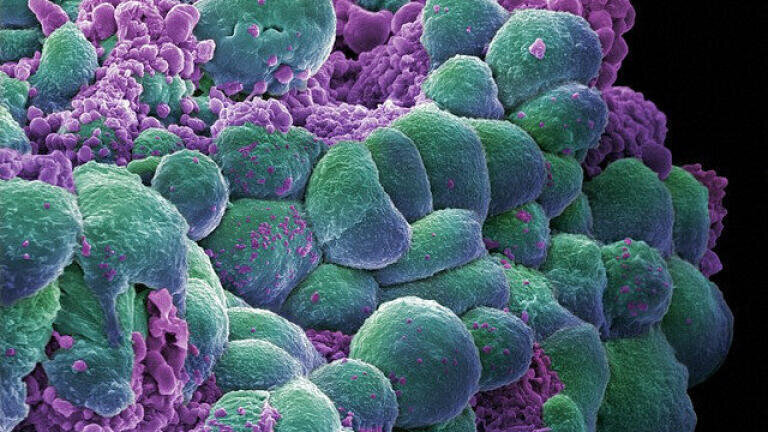
The world is ardently anticipating the day when medical scientists announce that a cure for cancer is on the horizon. Understandably, there’s copious excitement when a new development hits the stage. This was exactly the scenario when researchers at the University of Manchester revealed the discovery of ‘heat seeking grenades’ that actively attack cancer cells. The nanomedicine breakthrough is the first of its kind to progress from concept to clinic, marking a huge step forward for one of the UK’s biggest educational institutions, and the field of nanomedicine as a whole.
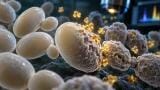
So what exactly are these ‘heat seeking grenades’ and how do they work? According to the research team, the microscopic bubbles dynamically hunt down heat, eventually forcing tumour cells to explode. In the lab these miniscule fatty spheres are officially referred to as liposomes. First discovered in the 1960s, they’re essentially closed spherical membranes that medical scientists can fill with custom gene medicines and drugs. They’re then be guided to certain areas of the body in order to deliver concentrated doses of therapeutic molecules.
Unfortunately, targeting tumours doesn’t always go to plan. As well as cancerous cells, the liposomes are programmed to attack rapidly dividing cells found in the stomach, bowel and hair follicles. The UoM team has overcome this problem by developing liposomes that only release and attack cells sitting at temperatures of 42 degrees Celsius. This is around five degrees warmer than normal human body temperatures which ensures that therapeutic molecules aren’t accidently released in the wrong location.
“Once they reach a ‘hotspot’ of warmed-up cancer cells, the pin is effectively pulled and the drugs are released,” explains study author Kostas Kostarelos. “This allows us to more effectively transport drugs to tumours, and should reduce collateral damage to healthy cells.”
Previous attempts to use light, enzymes and specific pH levels as triggers for the release of chemotherapy-loaded liposomes have been largely unsuccessful, which makes the latest heat oriented technique an exciting new development for the global fight against cancer!
Want to find out more about scientific breakthroughs in the medical sphere? ‘A New Tool in the Clinical Management of Sepsis’ looks at how the UK Sepsis Trust development of the ‘sepsis six’ toolkit is helping doctors fight common and potentially life-threatening infection using high-dose, broad-spectrum intravenous antibiotics and antifungals.
Image via Flickr Creative Commons. Credits: crafty_dame
Lab Asia 33.4 - August 2026
 Product directory