News
Published over 11 years ago. See the latest and most current information on News.
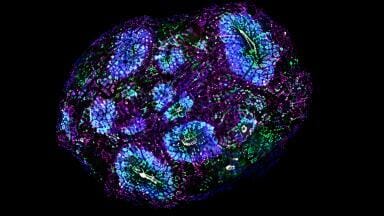
3D bio-printing is the revolutionary new technology which could completely alter the way we approach surgery, pharmaceutical testing and regenerative therapy. Though successful bio-printed prototypes are yet to materialise, the end goal of such a discipline is to structure a 3D working model of human tissue and organs and use real DNA as the “ink” in this complex printing operation, thus artificially creating a natural organ.
A regenerative medicinal company named Organovo, who are based in San Diego, were the first to pioneer the technique of 3D bio-printing in the commercial sphere. The company have already successfully manufactured samples of human tissue and are looking at consistently producing organs, culture plates and other structures which will be available to be used in a variety of applications, including the following:
Clearly, the potential benefits of this process are as exciting as they are numerous. However, before such a technique can become widely available, a few problems must be surmounted.
Up until now, scientists have had a difficult time in producing tissue that is hardy enough to withstand the rigorous procedures performed upon it during the printing process, yet still replicating the behaviour and structural makeup of human tissue.
Specifically, the billions of individual cells needed to make up an authentic piece of human tissue has been a stumbling block, as well as the ability of these cells to work in harmony with each other – which is vital to ensure the body distributes oxygen and blood in an even manner and excretes unwanted material.
Meanwhile, many techniques up until now have been rather unpredictable, making controlling them with foreseeable results a difficult endeavour.
Recent developments at Heriot Watt University in Edinburgh, Scotland, in the field of miniature VHS solenoid valves have shown promising signs for the future of the field. In several controlled studies, the bio-printers at the institute have been shown to produce highly viable samples of human tissue, which could prove to be a breakthrough in the history of 3D bio-printing.
Moreover, Organovo’s innovative methods of replicating the tissue that will constitute the bio-ink in future materials are advancing at an encouraging rate. Though many safety protocols and regulatory clearances are still required to be met before the practice becomes commercially available to the general populace, such an eventuality is not unthinkable in the foreseeable future.
Lab Asia 33.4 - August 2026



 Product directory