News
Published over 11 years ago. See the latest and most current information on News.
The recent Ebola virus outbreak is the worst in history, with almost 5,700 lives as of November 23rd 2014. The outbreak, which began in Guinea and spread to several other West African countries, has also seen secondary cases in the United States and Spain.
To date, there isn’t a vaccine or cure for Ebola. And despite being a relatively difficult disease to contract (you must have had contact with an infected individual’s bodily fluids) it is spreading rapidly. Back in September, the United States’ Centers for Disease Control and Prevention estimated there could be 1.4 million cases by early 2015.
Recently, we looked at the Ebola death rates and compard them with other deadly infectious diseases. Despite the shocking headlines about Ebola, you may be surprised by the results. Take a look at the infographic in this post: How does Ebola stack up against other infectious diseases?
But there has been some good news amongst the ominous stats and frightening projections. On the 20th October 2014 the World Health Organisation (WHO) declared Nigeria disease free.
The World Health Organisation is a United Nations agency dedicated to international public health. The primary objective of the agency is to ensure the highest possible level of health for all people. As of 2013, the WHO has 194 member states.
According to the website, the World Health Organisation “is responsible for providing leadership on global health matters, shaping the health research agenda, setting norms and standards, articulating evidence-based policy options, providing technical support to countries and monitoring and assessing health trends.”
Since the Ebola outbreak began in December 2013, the WHO has been leading the charge in the fight.
The news that Nigeria is Ebola-free has given hope to other nations affected by this outbreak. But, how did Nigeria and the WHO achieve such a difficult feat?
First, it is important to note that there were just 19 confirmed cases of Ebola in Nigeria - this is proof of the stunning work by Nigerian health workers to drop transmission rates. The virus has been able to spread rapidly through densely populated regions, but health officials in Nigeria quickly contained it. They did this through awareness-raising campaigns that taught sanitisation practices and early warning signs.
Edward Wright, senior professor of medical microbiology at the University of Westminster, explains that breaking the transmission is the best way to control the outbreak.
But is it enough? The scale of this particular outbreak is such that more extreme measures may be required. The World Health Organisation has been working hard to develop Ebola treatments and vaccines that could potentially be deployed by the middle of next year.
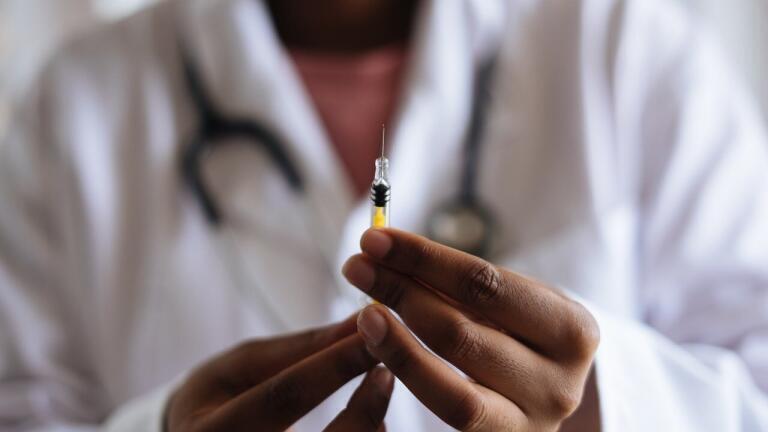
WHO currently have seven potential vaccines in development and human clinical trials are soon to follow. The hope is that by mid-2015, a few hundred thousand doses of the vaccine will be available. The combined efforts of international agencies, pharmaceutical companies and governments from around the world will, hopefully, see an end to this devastating disease.
Lab Asia 33.4 - August 2026
.jpg)

 Product directory












,-photo-Karin-Allander.jpg)







,-photo-Karin-Allander.jpg)