Research news
Researchers have identified glycoprotein nonmetastatic melanoma B as a potential antibody target to slow the spread of alpha-synuclein pathology in Parkinson’s disease
Monoclonal antibodies may help to block an immune-related protein that drives the spread of brain cell damage in Parkinson’s disease, according to a study from researchers at the Perelman School of Medicine at the University of Pennsylvania Philadelphia, USA.
The study has identified glycoprotein nonmetastatic melanoma B (GPNMB) as a potential therapeutic target in efforts to develop a treatment that could slow Parkinson’s disease progression at its earliest stages. The findings suggest that GPNMB may help to sustain a damaging biological cycle in which abnormal protein deposits spread through the brain and contribute to the death of neurons.
“Many patients with Parkinson’s disease are diagnosed in the early stages, when symptoms are relatively mild but there is currently no treatment that slows the progression,” said lead author Dr. Alice Chen Plotkin, ‘Parker Family’ Professor of Neurology.
“These early results are a promising step towards developing this type of treatment,” she said.
Parkinson’s disease affects between 10 and 12 million people worldwide, with roughly 1.3 million new diagnoses each year. Although its exact cause remains unclear, scientists have long recognised that the disease tends to progress through the brain in stages. This spread has been linked to abnormal clumps of alpha-synuclein, a protein found in neurons. When alpha-synuclein misfolds and accumulates, it can contribute to neuronal dysfunction and cell death. The pathological protein can then be released and taken up by neighbouring neurons which allows damage to move from one brain region to another.
As this process advances, patients can develop the worsening motor and non-motor symptoms characteristic of Parkinson’s disease, including:
Current treatments can help to manage symptoms but they do not alter the underlying course of the disease. These include levodopa, a medicine that helps to restore dopamine signalling, and also a therapy that uses deep-brain stimulation, in which implanted electrodes deliver controlled electrical impulses to specific brain regions.
In earlier research published in 2022, Chen Plotkin et al identified GPNMB as a key molecule involved in the neuron-to-neuron spread of alpha-synuclein pathology. This made the protein a compelling target for therapeutic development. In the latest study, the researchers found that microglia, the resident immune cells of the brain, were a major source of Parkinson’s disease-related GPNMB. When microglia were close to injured or dying neurons, they produced increased quantities of the protein. Enzymes then separated GPNMB from the cell surface which released part of the protein and allowed it to move between cells.
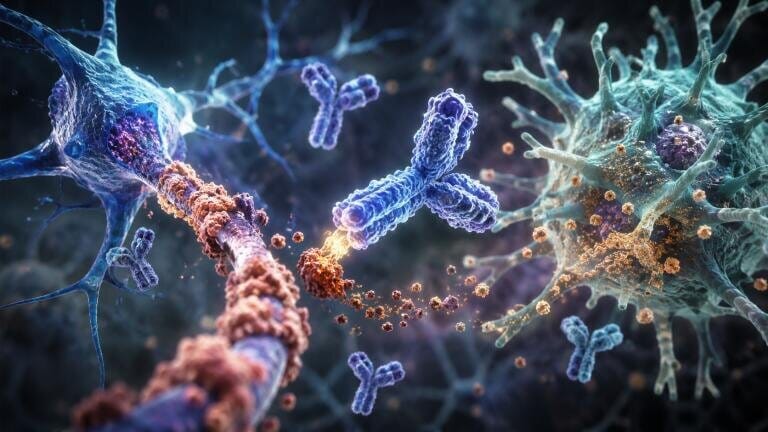
In preclinical experiments with cultured neurons, the researchers developed monoclonal antibodies designed to block GPNMB. These antibodies prevented alpha-synuclein pathology from spreading from cell to cell, which suggests that intervention against GPNMB could interrupt one of the mechanisms that allows Parkinson’s disease to progress.
“These results suggest Parkinson’s disease may be driven by a self-reinforcing cycle – alpha-synuclein accumulates in neurons, damaging the neurons.
“The injury to the neurons initiates the release of GPNMB, which accelerates the spread of alpha-synuclein, leading to further damage.
“Interrupting this cycle would hopefully slow, or even stop, the spread of alpha-synuclein through the brain and the neurodegeneration that follows,” Chen Plotkin said.
To assess the relevance of the findings in people, the researchers analysed tissue from 1,675 brains in the Penn Brain Bank – a brain and tissue bank run at the University of Pennsylvania for research into neurodegenerative diseases, including Parkinson’s disease, Alzheimer’s disease, Lewy body dementia, frontotemporal degeneration and amyotrophic lateral sclerosis.
Individuals with genetic variants associated with higher GPNMB production had more extensive alpha-synuclein pathology which provided human evidence to support a role for the protein in Parkinson’s disease progression. Elevated GPNMB levels were not associated with markers of other neurodegenerative diseases, such as Alzheimer’s disease which strengthened the case for its particular relevance to Parkinson’s disease biology.
The findings remain at a preclinical stage and the researchers stressed that further work will be needed before a GPNMB-targeted antibody therapy can be tested as a treatment for patients. Nevertheless, the study points to a possible disease-modifying approach in Parkinson’s disease, a field in which available therapies still focus largely on symptom control rather than on the underlying neurodegenerative process.
“These results are promising for laboratory models and human brain tissue analysis but we still have a lot of work to do before we can translate this therapy into humans,” said Chen Plotkin.
“That being said, these results are encouraging as we continue to work towards a novel treatment for Parkinson’s disease,” she concluded.
For further reading please visit: 10.1016/j.neuron.2026.04.033
ILM 51.6 Sept 2026



 Product directory




















,-photo-Karin-Allander.jpg)








.jpg)
