Research news
A vaccine regimen developed by La Jolla Institute for Immunology, Scripps Research and IAVI has produced substantial levels of rare human immunodeficiency virus-fighting antibodies in rhesus macaques, with human trials now under way
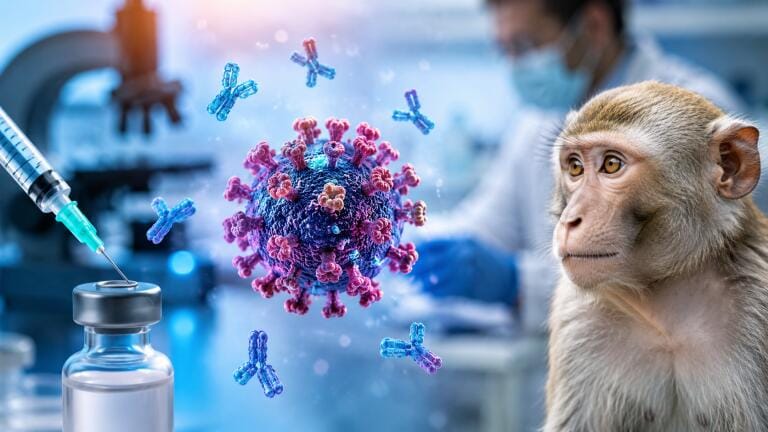
A human immunodeficiency virus (HIV) vaccine developed by scientists at La Jolla Institute for Immunology, Scripps Research, in California, and IAVI based New York, USA, has shown potential to help protect people from HIV infection and acquired immune deficiency syndrome (AIDS) by training the immune system to recognise vulnerable viral structures that usually evade detection.
The vaccine has become the first to generate large numbers of ‘broadly neutralising’ antibodies against HIV in primates. These rare immune proteins can recognise conserved regions of the virus, even when other parts of the viral surface mutate or change shape.
The research has been the result of 14 years of collaboration between La Jolla Institute for Immunology and Scripps Research as part of the Scripps Consortium for HIV/AIDS Vaccine Development.
“This feels like a huge success,” said Professor Shane Crotty, chief scientific officer at La Jolla Institute for Immunology, who co-led the research with Professor William Schief of Scripps Research.
“We constructed a successful vaccine from the ground up which required a deep understanding of the immune system,” he said.
The vaccine works by intervening in B-cell maturation. B cells produce antibodies and begin in a ‘naïve’ state before they receive signals that a pathogen has entered the body. Once activated, they mature and refine the antibodies they produce so those antibodies can bind more precisely to molecular targets.
HIV has remained especially difficult to target because its surface is shielded by a shifting layer of sugar molecules – known as glycans – which help the virus to avoid immune detection and attack. The virus also mutates rapidly, so antibodies that recognise one viral form may become ineffective against another. HIV also changes shape as it infects human cells, so structural targets can disappear before B cells have time to mount a durable response.
“The worldwide diversity of HIV mutations is extraordinary. Even the diversity within one individual person living with HIV [can be] dramatic,” said Dr Patrick Madden, of La Jolla and co-first author of the study with Dr Jon Steichen, an institute investigator at Scripps Research.
These features mean that B cells rarely have a chance to develop antibodies that can neutralise HIV across a broad range of viral variants. Even when a B cell produces neutralising antibodies, the virus can mutate or alter its conformation to escape them.
The research teams spent years studying broadly neutralising antibodies that can recognise conserved viral structures despite this variation. Such antibodies are extremely uncommon but researchers have identified them in blood samples from a small number of people who live with HIV.
To design the vaccine, the scientists studied B cells capable of producing powerful HIV-fighting antibodies and worked backwards to understand how those cells had matured. This helped them to identify viral structures that could steer B cells towards the desired antibody response.
The Schief laboratory at Scripps developed engineered vaccine molecules designed to resemble the relevant HIV antigens. The researchers then worked with Emory National Primate Research Center to test the vaccine strategy in rhesus macaques, a non-human primate species widely used in immunology and vaccine research.
The animals first received a priming vaccine intended to activate naive B cells. They then received booster vaccinations designed to guide those B cells along the desired maturation pathway. This staged approach is known as ‘germline targeting’ because it targets B cells in their germline – or naïve – form before they begin the immune training process.
The results showed that about 44 per cent of the animals produced broadly neutralising antibodies against HIV in their blood. The antibodies were also present at substantial levels, an important finding because circulating antibodies could encounter and potentially block the virus before infection took hold.
The researchers did not test whether these antibodies prevented infection, so the findings do not yet show whether the vaccine protects against HIV exposure. However, the detection of abundant broadly neutralising antibodies in the blood represents a significant step towards a vaccine strategy that could provide durable protection.
The antibody responses seen in the macaques closely resembled the broadly neutralising antibodies found in the rare people who naturally produce such responses against HIV. The priming immunogen used in the study has been evaluated in people in the HIV Vaccine Trials Network 144 trial and is currently under assessment in the phase 1 IAVI G004 trial. IAVI, Scripps Research, the HIV Vaccine Trials Network and partners have advanced plans to evaluate the full immunisation regimen in a future human clinical study.
For further reading please visit: 10.1038/s41586-026-10837-5
ILM 51.6 Sept 2026





 Product directory




















,-photo-Karin-Allander.jpg)







.jpg)