Research news
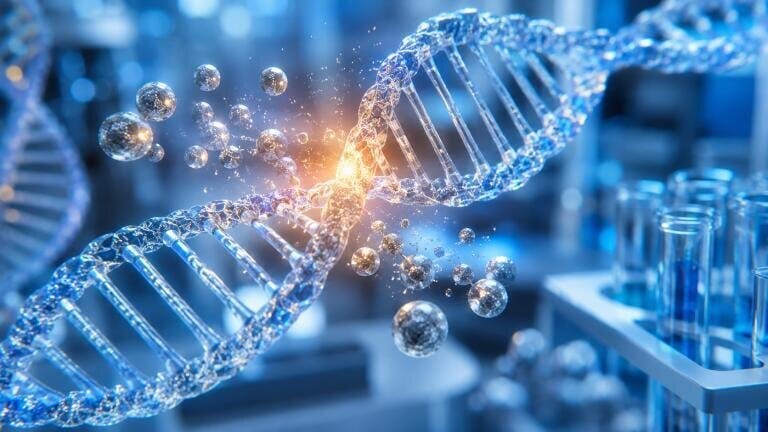
Researchers have developed a silver nanoparticle-based method to cut and join DNA at targeted sites with assembly efficiency reported to be up to five times higher than conventional restriction enzyme methods
A Japanese research team has developed a silver nanoparticle-based method to cut and join DNA at targeted sites, with DNA assembly efficiency reported to be two to five times higher than that achieved with conventional restriction enzyme approaches.
Researchers in Japan have reported a chemical method to cut and assemble DNA at targeted sites in work that could support more efficient construction of long genetic sequences for synthetic biology, gene therapy, vaccine research and crop biotechnology.
In genetic engineering, researchers cut DNA at defined positions and connect the resulting fragments to other DNA sequences. This process underpins applications that include advanced crop breeding, studies of inherited disease, the development of genetic medicines and the creation of animal models for drug discovery.
A central challenge in DNA assembly is to create short single-stranded extensions at the ends of DNA fragments. These extensions – known as sticky ends – allow fragments with complementary sequences to bind to one another before enzymes complete the joining process. However, to create suitable sticky ends requires highly precise cleavage at intended sites. Current methods can restrict the length and design of these overhangs, which can limit assembly efficiency.
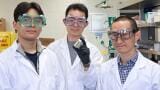
The research group, led by Professor Hiroshi Abe and Assistant Professor Masahito Inagaki at Nagoya University, in collaboration with Professor Natsuhisa Oka at Gifu University, both in Japan, examined whether chemical reactions could offer an alternative to conventional DNA-cutting enzymes.
Traditional long-chain DNA assembly commonly relies on restriction enzymes to cut DNA and T4 DNA ligase to reconnect the fragments. Restriction enzymes recognise particular DNA sequences and cleave at or near those sites. Although the method is well established, it also imposes constraints because each enzyme cuts only at specific recognition sequences and often produces sticky ends that are short. These short overhangs can reduce the efficiency with which DNA fragments find and bind their correct partners.
To address this limitation, the researchers investigated a reaction that was first reported in 1992, in which silver ions cleave 3′-thiol-modified DNA at specific sites. The team assessed whether this reaction could be adapted to create useful sticky ends for DNA assembly.
The results showed that silver ions could cleave DNA efficiently but the ions also bound non-specifically to DNA and caused precipitation. This left a DNA recovery rate of about 14 per cent which the researchers considered too low for practical use.
The team then turned to silver nanoparticles proposing that nanoparticles could drive the cleavage reaction but then be removed by centrifuge to separate materials. This approach was intended to improve DNA recovery after cleavage.
Initial experiments showed that DNA cleavage efficiency reached about 50 per cent at 70°C and almost 100 per cent at 95°C within two hours. However, such temperatures can damage long-chain DNA and therefore it limits practical use for the assembly of larger genetic constructs.
The researchers then coated the nanoparticles with polyethylene glycol (PEG) a water-soluble polymer used to improve stability and dispersion in solution. The modification improved cleavage efficiency at milder temperatures. At 37°C across 31 hours, cleavage efficiency increased from 36 per cent without PEG to 92 per cent with PEG.
“In the end, we optimised the conditions to a practical level and, under ambient temperatures, achieved PEG-modified cleaving efficiency above 91 per cent at 50°C within just one to two hours,” said Inagaki, the study’s first author.
The method also provided a purification advantage by unwanted DNA fragments binding to the nanoparticle surfaces and being removed from the reaction mixture, while the desired fragments with sticky ends remained in solution. This process increased final DNA recovery from 14 per cent to 98 per cent.
The use of silver nanoparticles also allowed the team to generate DNA fragments with 8-base sticky ends which are difficult to produce with conventional restriction enzymes. When the researchers used T4 DNA ligase to connect the fragments, joining efficiency was about twice that achieved by traditional methods. With an 18-base overhang, joining efficiency reached 44 per cent, compared with eight per cent for a conventional 4-base overhang – a fivefold improvement.
To test the practical value of the approach, the researchers assembled a DNA fragment that encoded green fluorescent protein (GFP) and introduced it into human HeLa cells. The cells expressed GFP which indicated that the DNA had been assembled accurately and remained functional in a cellular system.
“We believe this technology will be useful for synthesising genomic DNA with many possible applications in areas such as messenger RNA library establishment for cancer vaccines and gene therapy, as well as the development of artificial protein drugs and genome crops,” said Inagaki.
“We have shown that two DNA fragments can be joined. Now, we need to confirm whether multiple fragments can be joined at the same time, a key step for building genome-scale DNA,” he added.
For further reading please visit: 10.1093/nar/gkag525
ILM 51.6 Sept 2026



 Product directory














,-photo-Karin-Allander.jpg)






.jpg)
