Research news
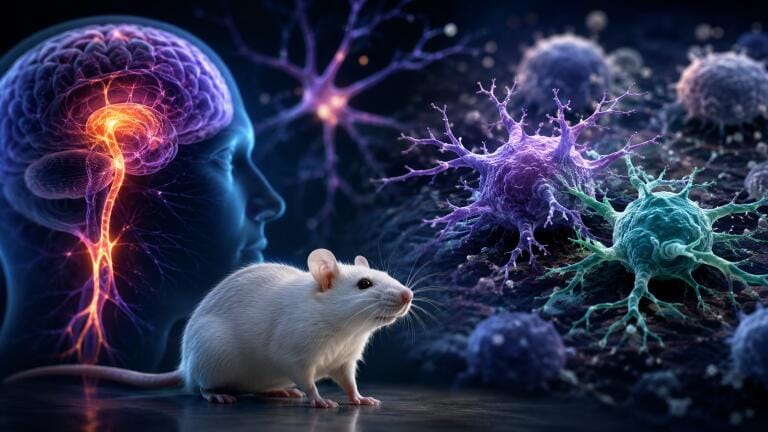
Research in mouse models of Parkinson’s disease has suggested that interleukin-6 may help to protect dopaminergic neurons, with female mice more vulnerable to neurodegeneration when the cytokine was absent
Parkinson’s disease is the second most common neurodegenerative disorder after Alzheimer’s disease and is marked chiefly by the progressive loss of dopamine-producing neurons in the nigrostriatal pathway, a brain circuit essential for voluntary movement. The condition is also associated with neuroinflammation, in which immune-related processes in the brain may contribute to neuronal damage and disease progression.
A collaborative research team from Fudan University and Tongji University, both in Shanghai, China, has investigated how interleukin-6 (IL-6) deficiency affects Parkinson’s disease pathology in male and female mice. The study examined whether loss of IL-6 altered neuroinflammation, motor function and degeneration of the nigrostriatal pathway in experimental models of the disease.
Although Parkinson’s disease is more common in men than in women, women can experience more severe symptoms in advanced disease. The biological mechanisms that drive these sex differences have remained incompletely understood. IL-6 – a cytokine involved in immune signalling – has attracted increasing attention in Parkinson’s disease research because it can act in apparently contradictory ways. In some contexts, IL-6 promotes inflammation but in others, it can support both neuronal survival and tissue repair. This dual role has made its contribution to Parkinson’s disease both important and controversial.
The researchers used IL-6 knockout mice, which lacked the gene required to produce IL-6, and compared them with wild-type mice. They then induced Parkinson’s disease-like pathology by two established methods:
Behavioural tests and molecular analyses showed that IL-6 deficiency significantly worsened motor dysfunction and accelerated the loss of dopaminergic nerve fibres in the striatum. The findings indicated that IL-6 was not simply a marker of inflammation in these models but appeared to have a protective role in the dopaminergic system.
However, a key finding was the clear sex-specific pattern of vulnerability. Female IL-6 knockout mice developed earlier and more extensive dopaminergic injury than male IL-6 knockout mice. This was accompanied by stronger reactive activation of astrocytes and microglia, the principal support and immune-responsive cells of the central nervous system. Excessive activation of these cells can amplify inflammatory damage and may intensify the degeneration of neurons already under stress.
Proteomic analyses, which assess large-scale changes in protein expression and cellular pathways, suggested that the accelerated pathology in female mice was linked to dysregulation of oestrogen signalling, mitogen-activated protein kinase signalling and phosphoinositide 3-kinase-protein kinase B signalling. These pathways are known to influence inflammation, cell survival, neuronal stress responses and hormone-related biological differences between the sexes.
The team also tested whether restoration of IL-6 could reduce the more severe neurodegenerative effects. Early intraperitoneal administration of recombinant interleukin-6 (rIL-6) partly improved motor dysfunction and reduced depletion of dopaminergic terminals in mice with Parkinson’s disease-like pathology. Treatment with 500 nanograms of rIL-6 increased levels of tyrosine hydroxylase, an enzyme required for dopamine synthesis and widely used as a marker of dopaminergic neurons. The treatment also helped to rescue tyrosine hydroxylase-positive neuronal loss, which suggested that IL-6 supplementation could protect vulnerable dopaminergic neurons from neurotoxic injury.
The results have highlighted the importance of IL-6 in the regulation of neuroinflammation and the preservation of the nigrostriatal pathway. They have also suggested that sex may be an important factor in the immune mechanisms that shape Parkinson’s disease progression. However, the work remains preclinical, and mouse models do not fully reproduce the complexity of human Parkinson’s disease. Further studies will be needed to separate the central effects of IL-6 in the brain from its peripheral immune effects elsewhere in the body and to assess whether any therapeutic approach based on IL-6 modulation could be safe and effective in the clinic.
The findings suggest that targeted immune modulation could form part of a more personalised approach to Parkinson’s disease treatment. By clarifying how IL-6 influences neuroinflammation and dopaminergic neuron survival in a sex-dependent manner, the study has identified a possible route towards therapies that account for biological differences between male and female patients.
For further reading please visit: 10.1016/j.gendis.2025.101986
ILM 51.6 Sept 2026



 Product directory




















,-photo-Karin-Allander.jpg)







.jpg)
