News
Published over 10 years ago. See the latest and most current information on News.
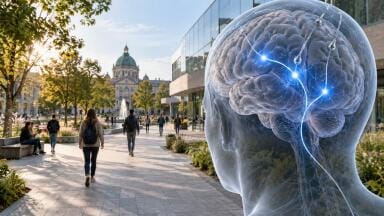
Renowned as one of the most brilliant minds of all time, Albert Einstein was an exceptional theoretical physicist, dynamic peace campaigner and categorical genius. Over 60 years ago on the morning of April 18 1955, Einstein took his last breath at New Jersey’s Princeton Hospital. Einstein knew he was dying, and made a specific request to be cremated as he didn’t want people to worship his bones. This request was granted, with his ashes scattered in an unidentified location. His brain on the other hand, is an entirely different story.
The day after his cremation Einstein’s son was informed that his father’s body had not been intact. The news was quickly splashed across the media, with the New York Times publishing a front page article reporting that "the brain that worked out the theory of relativity and made possible the development of nuclear fission" had been removed for scientific purposes.
So what happened to Einstein’s brain? Dr Thomas Harvey was the pathologist who carried out the autopsy. As well as pinpointing the cause of death as a burst aorta, he also sawed open Einstein's skull and snatched his world famous brain.
Carolyn Abraham, author of ‘Possessing Genius: The Bizarre Odyssey of Einstein's Brain’ recalls, "He had some big professional hopes pinned on that brain. I think he had hoped to make a name for himself in medicine in a way that he had been unable to do. And then he comes to work one morning and finds Albert Einstein on his autopsy table."
While Harvey was not a qualified neurologist he did maintain that he would enlist the help of the world’s top brain scientists. He did go on to send slithers of the coveted organ to a number of different researchers, including Harvard University’s Dr Marian Diamond. Yet despite his highest hopes, all found that the genius had an average number of normal sized brain cells. Unfortunately, no real progress was ever made.
While some maintain that Harvey did a wonderful thing for science by stealing Einstein’s brain, others are adamant he’s nothing more than a heinous grave robber. Whether or not new findings could still come to light remains to be seen.
Liquid chromatography mass spectrometry (LC-MS) plays an integral role in helping scientists to characterise complex biological mixtures at the protein and metabolite level. Brain science employs this technique at the highest level. ‘Advances in Multi-mode Mass Spectrometry for Tissue Imaging Studies’ explores the field in further detail, looking at how imaging mass spectrometry (IMS) has been successfully used to overcome spatial localisation challenges.
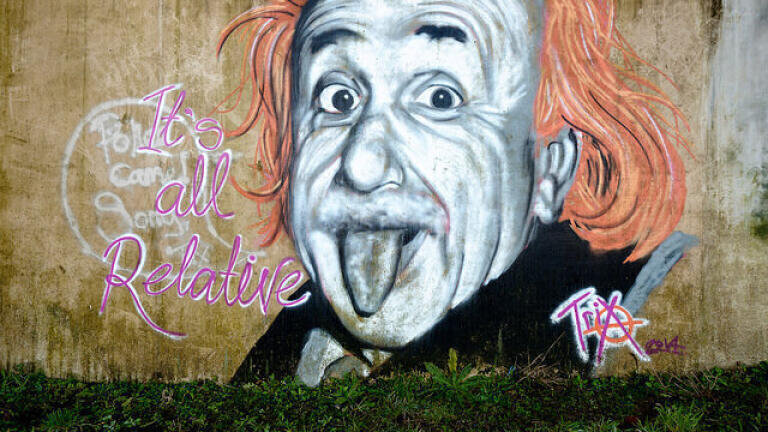
Image via Flickr Creative Commons. Photo credits: kennysarmy
Lab Asia 33.4 - August 2026
 Product directory