News
Published over 10 years ago. See the latest and most current information on News.
When sun seekers cruise along the surface in their motor boats, there’s little thought given to the impact the roaring machines may have on the marine life below. While whales, dolphins, sharks and other large animals remain largely unaffected, the latest research has shown that their smaller counterparts are easier to prey on due to the noise pollution.
Conducted by scientists at the UK’s University of Exeter, the study found that predator fish were able to gobble down twice as many smaller fish when motor boats were in close proximity. This indicates that there’s a direct link between noise pollution and fish survival.
Steve Simpson, head of the international research team described the effect as a “cloak of noise” that directly impacts the vulnerability and hunting skills of marine fish.
“Noise is yet another [manmade] problem for the oceans, but it is one we can solve more easily than things like climate change,” explains Simpson. “If we can take one of the stressors out of the equation, we can give fish one less thing to worry about.”
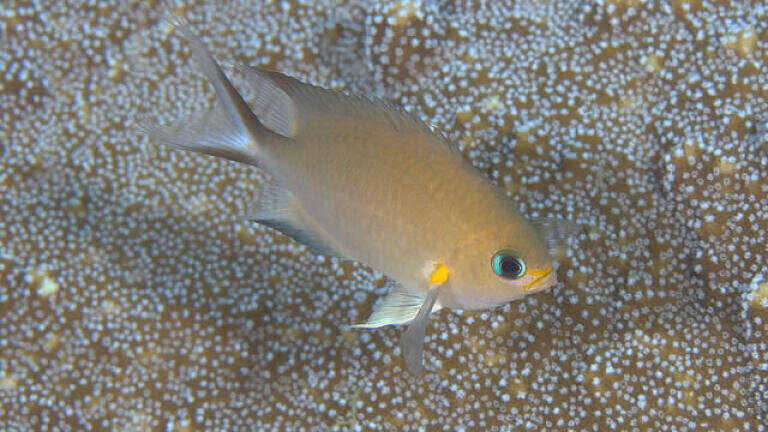
The research was carried out at the Great Barrier Reef’s Lizard Island, where scientists studied the behaviour patterns of young ambon damselfish, and their predator counterparts, dusky dottybacks.
When motor boats were close by the number of devoured damselfish doubled, as well as increased stress levels by 33%. The small ‘Pomacentrus amboinensis’ were six times less likely to be startled as a predator approached, and were still 22% slower to flee when they realised they were under attack.
“In this case, the motor boats spell death for the young fish,” said Simpson. “Under the cloak of noise, the predator is winning.” He compares the effects of stress to the impact it can have on people, explaining that “It can cause fish to respond [to attacks] in the wrong ways.”
When it comes to conservation, the new research offers invaluable insight into how marine biologists can protect ecosystems. Mark Meekan of the Australian Institute of Marine Science asserts, “If we can reduce the effect of local noise pollution, we can build greater resilience in reef communities to looming threats such as global warming.”
Noise pollution isn’t the only factor putting Australia’s marine life at risk. Pesticides are also a major cause for concern, seeping into oceans and poisoning wildlife. ‘Managing PAHs and Pesticides with a Rapid UHPLC-MS/MS Analysis’ looks at how the issue is being managed, and the role of rapid UHPLC-MS/MS analysis in differentiating between compounds in order to define a composition and pinpoint toxicity risks.
Image via Flickr Creative Commons. Photo credits: Klaus Stiefel
Lab Asia 33.4 - August 2026

 Product directory