News
Published over 10 years ago. See the latest and most current information on News.
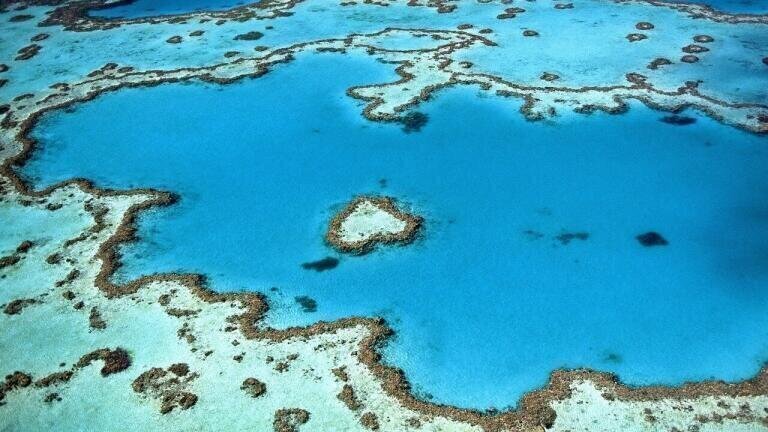
Australia’s Great Barrier Reef is renowned as the largest living organism on the planet, with a footprint that dazzles even from outer space. It’s celebrated as an ecological wonder, yet according to a statement released by the Australian Research Council, the 2300km long coral ecosystem is on the brink of collapse.
After conducting aerial surveys of over 500 coral reefs spanning from Cairns to Papua New Guinea, the National Coral Bleaching Taskforce (NCBT) discovered that the northern section of the Great Barrier Reef is currently experiencing "the worst mass bleaching event in its history." NCBT convenor Prof. Terry Hughes, was part of the research team, and described the experience as “the saddest research trip of my life.”
“Almost without exception, every reef we flew across showed consistently high levels of bleaching, from the reef slope right up onto the top of the reef. We flew for 4000km in the most pristine parts of the Great Barrier Reef and saw only four reefs that had no bleaching.”
So what causes coral bleaching, and why is the Great Barrier Reef so vulnerable? Stress is the decisive factor, caused by exposure to warmer than average water temperatures for extended periods of time. In response, corals shed their coating of coloured algae, which creates a bleached effect. When stress is too intense coral can die, and algae can fail to return as it’s unable to recognise its host organism.
“We could see extensive bleaching even among the most robust ‘massive’ corals,” explains James Kerry, Project Manager of the NCBT. “The fact that these hardy species have also turned white shows just how severe summer conditions have become on the northern GBR.”
While the Great Barrier Reef has experienced major coral bleaching incidents in 1998 and in 2002, they weren’t on the scale of what’s currently being reported. Today, an alarming 95% of its northern reefs are showing signs of extreme bleaching, compared to just 18% recorded in 2002. Coral mortality rates are expected to hit 50%, which would be an unfathomable blow for Australia’s most famous natural treasure.
With both climate change and cyclical weather event El Nino cited as major water warming factors, researchers have described the scenario as a “perfect storm.” Not just for the Great Barrier Reef, but for coral ecosystems across the globe.
Bioscience plays an integral role in environmental protection efforts, and goes hand in hand with a host of complexities. For more insight into the arena, ‘Tackling Big Data Challenges in Bioscience’ spotlights the latest £7.5 million infrastructure investment, and the trio of projects currently being led by The Genome Analysis Centre (TGAC).
Lab Asia 33.4 - August 2026

 Product directory