News
Published over 9 years ago. See the latest and most current information on News.
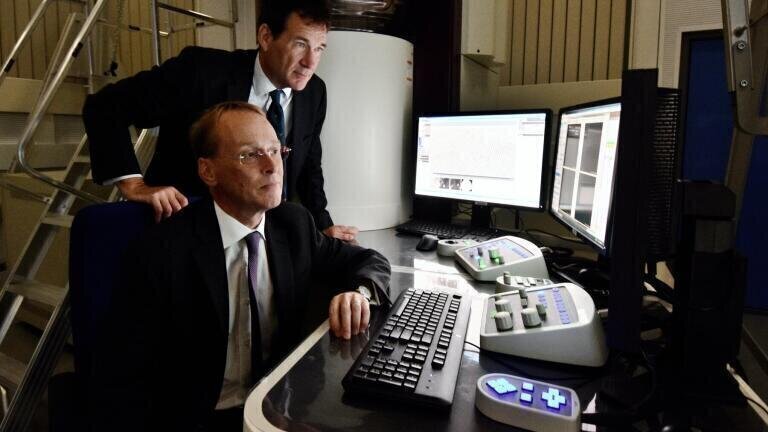
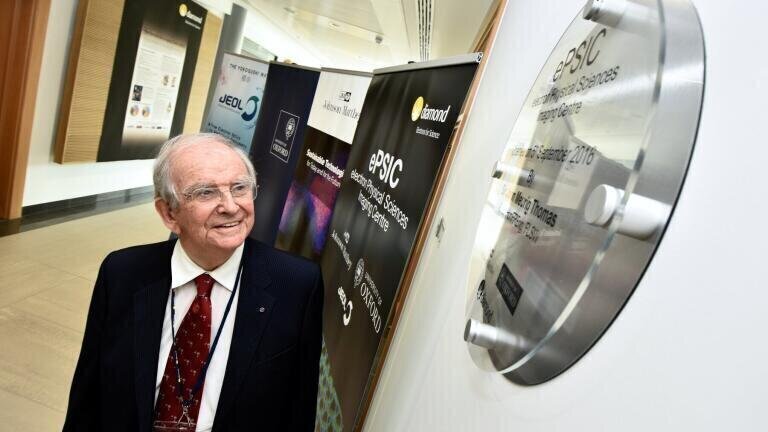
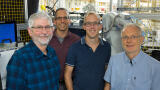
The Harwell Science Campus celebrated the opening of the electron Physical Sciences Centre (ePSIC) in September, the result of collaboration between Johnson Matthey, Oxford University, JEOL and Diamond, further strengthening the UK’s imaging platform capability for facilitating breakthrough technology. The new Centre, located at Diamond Light Source contains two powerful electron microscopes for the physical sciences designed to provide scientists with atomic-level images in a range of technologically important materials.
Funding for the construction of the new building to house ePSIC included contributions from the Wellcome Trust, JEOL Ltd, the Biotechnology and Biological Sciences Research Council and the Science and Technology Facilities Council.
The Vice-Chancellor of the University of Oxford, Professor Louise Richardson, said: “ePSIC is a powerful expression of what we can achieve when universities, research facilities and industry work in close partnership. Hosting these path-breaking technologies here in Oxfordshire will assist scientists with their pioneering research, helping them translate their ideas into breakthroughs which benefit us all.”
Robert MacLeod, Chief Executive of Johnson Matthey, said: “We are excited to be part of this unique collaboration for UK science. R&D is at the heart of our future success, and this new electron microscope will enable Johnson Matthey's scientists to actually ‘see’ and analyse individual atoms in real-time within the structure of our materials. This unrivalled capability in physical sciences is crucial for us in driving innovation in new and existing products for our customers.”
Professor Andrew Harrison, CEO at Diamond, said: 'Diamond is a world-leading centre for visualising physical and biological materials at the atomic and molecular level, and it makes sense to complement our capabilities with electron microscopy. Information gained will give us microscopic properties and valuable insight into the electronic structure of materials, strength, and much more. The centre will be open to all and will operate like our beamlines, through both academic peer review and proprietary access. As a result, the Diamond synchrotron will become the first in the world to house such a complementary set of techniques.”
Accompanying the two microscopes for the physical sciences, the facility will also contain microscopes to support research in the life sciences. Known as eBIC (the electron Bio-Imaging Centre), this complementary centre will provide similar tools to ePSIC for cryo-electron microscopy research into biological matter, such as viruses and bacteria.
ILM Guide 2026/27

 Product directory
















.jpg)
,-G.-von-de-Kerkhof-(Diamond),-M.-Schuster.jpg)