News
Published over 12 years ago. See the latest and most current information on News.
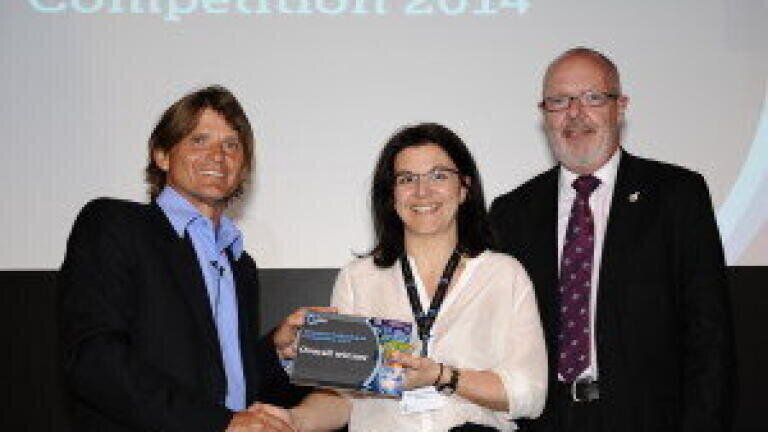
Researchers at the Medical Research Council’s Human Nutrition Research Unit HNR have developed a new oral iron supplement that uses nanotechnology to mimic the natural structure of dietary iron. The nano-iron supplement, called IHAT aims to treat iron deficiency anaemia by replenishing blood iron stores almost as well as currently available iron supplements without assiciated unpleasant gastrointestinal side-effects, according to a report on a new human trial*.The supplement won the overall Life Sciences category of the Royal Society of Chemistry’s Emerging Technologies Competition.
Dr Jonathan Powell, co-inventor of IHAT and head of the Biomineral Research Group at HNR said: “Current forms of oral iron are either toxic or expensive, and in some cases both, and these are significant barriers to the implementation of effective oral iron therapy. Patients don’t like side effects and health providers don’t like expensive therapeutics. IHAT is based upon understanding how dietary iron digestion works and all the evidence is that it is safe, side effect-free, well absorbed and cheap to manufacture. These are exciting times.”
Dr Dora Pereira, lead author on the paper and co-inventor of IHAT said: “I am delighted that our novel iron supplement has won the RSC competition; this will raise awareness of the problem of iron deficiency anaemia. We hope to attract further funding to continue trials in humans with the aim of developing an effective and safe treatment for iron deficiency anaemia. After the 10 years hard work that we’ve put into basic research on how natural dietary iron is digested, and using that knowledge as a basis to develop this new technology, I feel very proud to have received this award.”
*In Nanomedicine
ILM 51.6 Sept 2026

 Product directory












.jpg)
,-photo-Karin-Allander.jpg)












.jpg)
