News
Published over 8 years ago. See the latest and most current information on News.
Increasing levels of antifungal drug resistance could lead to increased disease outbreaks and affect food security around the world, according to new research funded by the MRC. An international team warns that improvements are needed in how existing drugs are used and that there needs to be an increased focus on the discovery of new treatments, in order to avoid a “global collapse” in our ability to control and fight fungal infections.
The rise in resistance to antifungal treatments mirrors the well-established threat of bacteria which have become resistant to antibiotics, according to the researchers led by Imperial College London and the University of Exeter.
Professor Matthew Fisher, of the School of Public Health at Imperial and first author of the study*, said: “The threat of antimicrobial resistance (AMR) is well established in bacteria, but has largely been neglected in fungi. The scale of the problem has been, until now, under-recognised and under-appreciated, but the threat to human health and the food chain are serious and immediate.”
He added: “Fungi are a growing threat to human and crop health as new species and variants spread around the world, so it is essential that we have means to combat them. However, the very limited number of antifungal drugs means that the emergence of resistance is leading to many common fungal infections becoming incurable.”
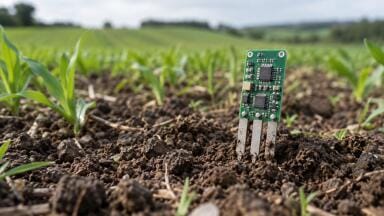
Fungal pathogens are responsible for a broad range of infections in humans, animals and plants. Common fungal infections include blights which affect food crops as well as yeast and mould-related infections in humans and livestock, which can be fatal for those with underlying conditions.
Crop-destroying fungi are thought to account for a loss of 20% of global crop yields each year, and the direct threat to human health is increasingly significant. Researchers estimate the number of human deaths from fungal diseases – often affecting those with weakened immune systems – now exceeds those from malaria and breast cancer, and is comparable to numbers of those caused by tuberculosis and HIV.
The work was supported by the MRC, the Natural Environment Research Council (NERC) and the Biotechnology and Biological Sciences Research Council (BBSRC).
*Findings reported in Science
ILM 51.6 Sept 2026




 Product directory


.jpg)