News
Published over 10 years ago. See the latest and most current information on News.
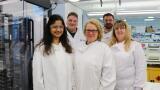
One of the clearest insights yet into crucial biochemical processes that are active in many diseases, has been achieved through pioneering chemical technology developed by researchers at the University of Dundee. Dr Satpal Virdee in the University’s Medical Research Council Protein Phosphorylation & Ubiquitylation Unit (MRC-PPU), School of Life Sciences, has already led the research team to discoveries related to a cause of Parkinson’s disease.
Dundee is a world leading centre for research into protein ubiquitylation, a cellular regulatory mechanism involving the attachment of the small protein ubiquitin to other proteins; these mark damaged or unwanted proteins for destruction and specific ones can be tagged with ubiquitin. This specificity is achieved by around 600 protein enzymes known as E3s; if an E3 is faulty however, then this can manifest itself as disease.
Measuring the activity of a single E3 enzyme in the cell has proved challenging - now Dr Virdee’s group has developed a chemical probe that allows not only a single E3’s activity in a cell to be measured, but, in principle, the activity of dozens of E3s to be measured simultaneously.
“This technology should revolutionise our ability to understand the roles of E3s and protein ubiquitylation in both normal and diseased cells with immediate translational potential to address diseases,” said Dr Virdee. “We made a number of novel findings around how Parkin is activated in the cell. For the first time our probes enable direct and quantitative measurement of endogenous Parkin activity. Our probes have given new insights into the pathogenic basis for the many patient mutations that are found within Parkin. We have also shown that our technology can potentially be used as a clinical tool to assess the functionality of the Parkin pathway in patients.”
The research, carried out in collaboration with Dr Miratul Muqit’s group in the MRC-PPU at Dundee and with colleagues at Sorbonne Universités in Paris, has been funded by the Scottish Funding Council and the Medical Research Council. *Published in the journal Nature Chemical Biology.
ILM 51.6 Sept 2026

 Product directory