
News
Published over 9 years ago. See the latest and most current information on News.
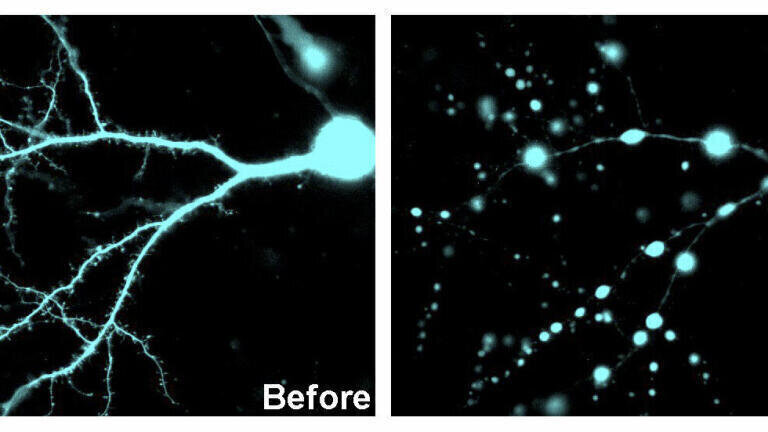
A breakthrough in understanding how brain damage spreads – and how it could potentially be limited – has been made by neuroscientists and engineers at the Universities of Dundee and Strathclyde, who have uncovered a previously unknown mechanism in the brain that allows networks of neurons to protect against the kind of spreading secondary damage seen in cases of strokes and traumatic brain injuries.
“If this network activity could be triggered clinically as soon as possible then major brain damage could be minimised and recovery periods shortened,” said Dr Christopher Connolly, Reader in Neurobiology in the University of Dundee’s School of Medicine. “Although this is basic laboratory research, it does now re-open the door to the possibility of stopping ongoing brain damage.
“Slow acting neuroprotection is well known but approaches to induce protection require at least 24 hours' notice to be effective. This is of no practical use in a clinical emergency situation such as a stroke or traumatic brain injury, so current treatment options are limited to aiding the recovery processes.
“We have identified that neuronal networks react to an insult by sending rapid - in minutes - warning signals in an attempt to protect against the toxicity that causes brain damage. If that could be recruited clinically then it would give us a tool to deploy quickly in cases where brain damage was a risk. Where we can’t protect neurons quickly, we can recruit the help of surrounding neurons to do this for us. It is a case of `If you need a job done quickly, ask the expert’ and in this instance the experts are the neurons themselves,” Dr Connolly added.
Laboratory-based modelling also showed that the rapid use of benzodiazepines (Valium) appeared to mimic the protection offered by the neuron networks.“This is something we certainly need to test further but it does suggest the possibility of an effective and immediate pharmacological treatment for stroke,” said Dr Connolly.
Dr Connolly worked on the project with Dr Michele Zagnoni, Senior Lecturer in Electronic and Electrical Engineering at the University of Strathclyde. “Using microfluidic technology, we were able to produce in-vitro neuronal networks to investigate spreading toxicity in the brain, which is the cause of brain damage even after an initial trauma, said Dr Zagnoni.
Published in Scientific Reports 21/09/2016
ILM Guide 2026/27

 Product directory






















.jpg)