News
Published over 9 years ago. See the latest and most current information on News.
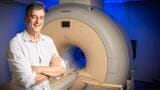
Nottingham University experts in magnetic resonance imaging (MRI) and kidney disease have carried out the first ever scans to study the heart function of kidney patients while they are having dialysis treatment. During dialysis falls in blood pressure and reduced blood flow can cause long-term damage to the heart.
Researchers from the University’s Sir Peter Mansfield Imaging Centre (SPMIC) and the Centre for Kidney Research and Innovation (CKRI) compared two different types of dialysis in this regard: standard haemodialysis (HD) and hemodiafiltration (HDF), a process that removes more fluid during treatment but with additional replacement fluid being given to the patient. During the study 12 kidney dialysis patients who were each allocated to receive both standard haemodialysis (HD) and HDF in a random order.
They found significant cardiovascular effects with both standard haemodialysis and HDF, but no differences between the two. Results demonstrate that cardiac MRI can be a vital tool for evaluating future improvements to dialysis treatment.
Professor of Medicine (Nephrology), Maarten Taal, said: “Using this unique set-up we were able to monitor multiple cardiovascular measurements while dialysis was taking place in the patients. We measured how many litres of blood were pumped per minute by the left ventricle of the heart, how well the heart muscle was able to contract, blood flow in the coronary artery which supplies the heart muscle and myocardial perfusion to check the efficiency of blood flow to the capillaries or tiny blood vessels in the heart muscle.”
“Interestingly, we found all measures of systolic contractile function fell during both standard haemodialysis and haemodiafiltration with partial recovery after dialysis. All patients showed some degree of left ventricular dysfunction and blood flow to the small capillaries in the heart muscle decreased significantly during both types of treatment. Our observations confirm the need for interventions to reduce the negative impact of dialysis on the heart.”
Having successfully tested this method, the research team is now aiming to test the effects of other dialysis treatments using MRI.
Intradialytic Cardiac Magnetic Resonance Imaging to Assess Cardiovascular Responses in a Short-Term Trial of Hemodiafiltration and Hemodialysis is published in the Journal of the American Society of Nephrology (JASN).
ILM Guide 2026/27



 Product directory