Shakers
Published over 7 years ago. See the latest and most current information on Shakers.
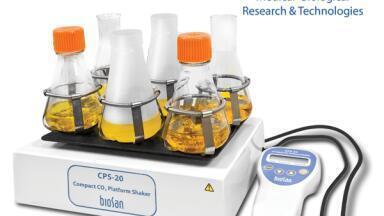
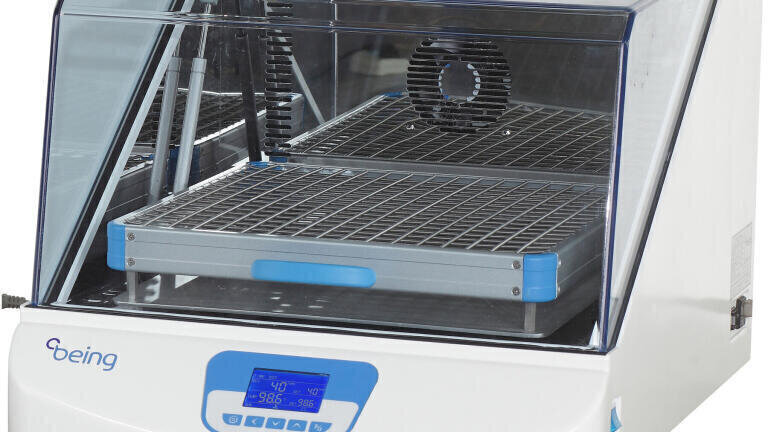
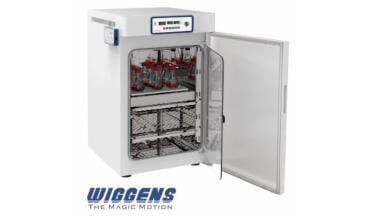
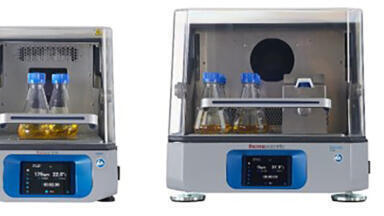
Being Incubated Shakers are often used for cell culturing, cell aeration, and solubility studies. In addition to stable temperature conditions, they use an orbital agitation at variable speeds to affect the growth of cell cultures.
Auto off and alarm occurs when the real shaking speed is 10% different from setting value, and the motor will stop automatically. Operated via a colourful LCD display, Being’s PID controller provides accurate speed and temperature with timed runs. The speed controller ensures smooth start/stop which can prevent liquid spilling to damage the equipment.
BIS Series Incubated Shakers cover a temperature range from 5°C over ambient temperature to 50°C with resolution of ±0.1°C. The timer range goes from 1 to 5,999 minutes.
Three models are available: 10.0" x 10.0" platform with Shaking Speed Range of 40 to 250 rpm; 13.8" x 13.8" platform with Shaking Speed Range of 40 to 300 rpm; 17.7" x 17.7" platform with Shaking Speed Range of 40 to 300 rpm.
The instrument has a temperature-limiting alarm system with an auto switch off when over-temperature. Other security features include a safety door switch and auto pause operation when door is opened. A high efficiency filter provides filtration of bacteria and dust.
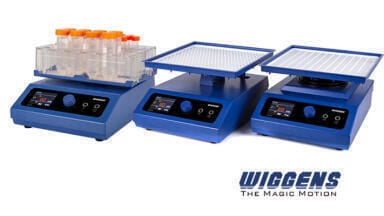
A large number of accessories (platforms, tube-racks, and flask clamps) to accommodate various needs are available.
ILM 51.6 Sept 2026


 Product directory


.jpg)
.jpg)











22_06-(1).jpg)