Chromatography
Published over 11 years ago. See the latest and most current information on Chromatography.
At AstraZeneca R&D Mölndal, Sweden, many compounds are purified every day. It is therefore necessary to use a process plate format with generic methods, allowing for fast analysis and an easy scale up for preparative scale purification. Traditionally, all purifications were performed using RPLC-MS, but since 2012 approximately 50% of the compounds are purified using SFC-MS. Initially SFC-MS was more time consuming than RPLC-MS, as each separation needed to be optimised in several steps before purification.
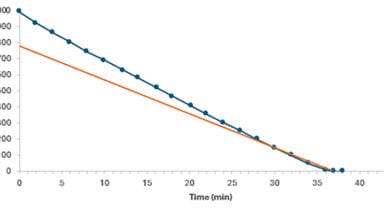
In this paper, we describe how analysis in SFC-MS has been optimised with regard to both sensitivity and robustness. We show a simple scale up procedure in which focused gradients for purification are predicted from the retention time in analysis. Finally, we discuss how recovery in SFC purification has been increased from 90% to 95% by using sample sandwiching injection.
Drug discovery is challenging and the search for new medicines needs to become more efficient. To deliver high quality compounds for testing, it is of great importance to ensure a time efficient way to purify compounds in large numbers. In our laboratory at AstraZeneca R&D Mölndal, RPLC-MS and SFC-MS are used as complementary techniques. Every year roughly 3000 achiral compounds are purified, which limits the time for method optimisation, therefore scale-up methods need to be generic. In addition all crude samples are delivered as DMSO solutions and this has to be considered. DMSO can give injection solvent effects in both SFC and RPLC, and it is also retained in SFC, which will put constraints on scale-up.
When implementing SFC in 2012 great efforts were made to optimise a purification method for each individual compound. This was very time consuming and therefore the majority of the compounds were purified using RPLC. This has been overcome by development of an easy scale-up methodology from a generic analytical gradient to a focused gradient in preparative scale. It was also observed that the recovery was lower in SFC than in RPLC, and that the difference was even higher for small amounts. Compounds less than 20 mg in scale were therefore purified using RPLC by default. Using an alternative injection technique has now circumvented this limitation.
Download the article to read more.
Lab Asia 33.4 - August 2026


 Product directory