Laboratory products
Regulated analytical laboratories are under increasing pressure to deliver more testing, faster turnaround times, and higher levels of data integrity, while simultaneously reducing operational costs and environmental impact. Quality control and stability laboratories in particular operate within strict regulatory frameworks that prioritise reproducibility, traceability, and audit readiness. These requirements have traditionally limited the pace of technological change, with many laboratories relying on manual workflows that are time‑consuming, resource‑intensive, and vulnerable to human error.
Automation and artificial intelligence (AI) are now emerging as practical tools capable of addressing these challenges. While historically viewed as difficult to validate or integrate into GMP environments, recent developments demonstrate that automation and AI can be implemented in a compliant, controlled, and sustainable manner. This article examines how regulated laboratories can apply these technologies to analytical workflows, focusing on sample preparation, digital workflow management, and data‑driven decision support. Real‑world laboratory applications are used to illustrate the principles behind successful implementation and the advantages offered over traditional manual techniques.
Automation in regulated laboratories is most effective when applied strategically to high‑risk or high‑effort, and tasks with high repetition rather than attempting to replace entire analytical processes. Sample preparation is a clear example. Many regulated methods involve complex, repetitive preparation steps that require precise timing, careful reagent handling, and sustained analyst attention. These steps often represent the greatest source of variability and error within the analytical workflow.
Automated sample preparation systems can perform reagent preparation, extraction, dilution, and conditioning with high repeatability. Importantly, automation does not need to encompass the entire workflow. Laboratories may choose to automate only the most critical or error‑prone steps, reducing risk while maintaining flexibility. This targeted approach also simplifies validation and allows laboratories to scale automation incrementally.
Beyond chromatography, automated sample preparation has proven applicable to a wide range of techniques including titration, UV‑visible spectroscopy, wet chemistry assays, and raw material testing. The ability to use a single automated platform across multiple analytical techniques significantly improves return on investment and supports long‑term laboratory resilience.
Physical automation alone is insufficient in regulated environments without robust digital infrastructure. Digital workflow and project management systems provide the framework required to manage complexity, documentation, and compliance across automation initiatives.
Centralised digital platforms allow laboratories to standardise method development, validation activities, and routine execution using predefined templates and workflows. Automated task assignment, version control, and audit trails ensure that required steps are consistently followed and fully documented. This approach reduces dependence on individual experience and minimises the risk of procedural deviation.
In addition, connected digital systems enable improved collaboration across teams and sites, providing a single source of truth for project status, documentation, and decision‑making. For regulated laboratories, this level of transparency and traceability directly supports inspection readiness and ongoing compliance.
Artificial intelligence is increasingly being applied to laboratory operations, not as a replacement for scientific judgement, but as a tool to enhance efficiency and insight. In regulated environments, AI is most valuable when used to support prioritisation, information retrieval, and trend identification.
AI‑enabled tools can identify workflow bottlenecks, flag recurring deviations, and surface historical data relevant to method development or investigations. Natural language interfaces allow analysts to rapidly locate procedures, validation records, or project updates without navigating complex file systems. This improves productivity while reducing the risk of working from outdated or incorrect information.
Crucially, AI systems used in regulated laboratories must operate within defined governance frameworks. Outputs should be transparent, auditable, and used to inform human decision‑making rather than replace it. When applied in this way, AI becomes a powerful enabler of consistency and continuous improvement.
The successful implementation of automation and AI in regulated laboratories depends on adherence to several key principles.
Automation projects should begin with a thorough understanding of the existing manual process. This includes identifying critical control points, sources of variability, and potential failure modes. Automation is then designed to reduce or eliminate these risks while maintaining analytical performance. Validation efforts focus on demonstrating consistent, controlled operation rather than simply confirming functional capability.
Regulatory guidance allows alternative or automated methods provided they demonstrate equivalent performance to the approved manual method. This distinction is critical. Automated workflows do not need to replicate every manual step if equivalent accuracy, precision, and suitability can be demonstrated. This flexibility enables laboratories to redesign workflows to reduce reagent consumption, waste generation, and hands‑on time.
Automation and digital systems must be designed with data integrity at their core. Secure user access, complete audit trails, electronic records, and controlled workflows ensure that automated processes strengthen rather than compromise compliance. When properly implemented, automation reduces manual transcription and enforces standardised execution, resulting in more robust and reliable data.
Titration methods are often overlooked in discussions around laboratory automation, yet they frequently present significant operational challenges. A typical raw material assay by titration may involve light‑sensitive reagents, freshly prepared solutions, precisely timed reaction steps, and immediate analysis due to limited solution stability. These requirements lock analysts into rigid, linear workflows and increase the likelihood of error.
In a regulated laboratory application, a manual titration assay was identified as a high risk, high effort process well suited to automation. The solution was delivered through a collaborative partnership with ePrep and METTLER TOLEDO, combining automated sample preparation with proven titration instrumentation to achieve performance equivalence to the manual method while reducing analyst workload, improving consistency, and maintaining regulatory compliance.
This approach deliberately leveraged the complementary expertise and established technologies of multiple instrument vendors, rather than pursuing a fully bespoke automation platform.
By integrating best in class, commercially supported solutions, the development avoided the cost, complexity, and validation burden typically associated with custom built automation. This strategy enabled greater flexibility in instrument selection and future adaptability, allowing components to be upgraded or reconfigured without redesigning the entire workflow.
The automated workflow focused on ensuring data integrity is maintained throughout the entire workflow to 21 CFR Part 11, PIC/s Annex 11 standards. In addition, controlling reagent preparation, reaction timing, and sample handling were key objectives in order to maintain equivalency to British Pharmacopeia and United States Pharmacopeia Monographs. Reagents were prepared at the start of the automated sequence, with precision timing used to replicate critical reaction steps.
Samples and blanks were processed in a staggered manner, and analysts were notified only when samples were ready for analysis.
Validation demonstrated that the automated method achieved equivalent accuracy, precision, and linearity to the manual assay. At the same time, hands‑on time was reduced from several hours to minutes, solvent usage was significantly lowered, and analyst availability was improved. The automated approach also eliminated the need for continuous bench supervision, improving safety and productivity.
The advantages of automation and AI in regulated laboratories extend well beyond time savings, supporting organisational commitments to sustainability by reducing resource consumption, minimising waste, and aligning laboratory operations with recognised frameworks such as the United Nations Global Goals for Sustainable Development and programs like My Green Lab.
Operational efficiency is improved through reduced hands‑on time, standardised execution, and the ability for analysts to multitask. Laboratories can increase throughput without increasing headcount, supporting business continuity during periods of increased demand.
Compliance and data integrity are strengthened through controlled workflows, automated documentation, and complete audit trails. Automation reduces variability associated with manual handling and ensures consistent application of approved procedures.
Environmental sustainability benefits arise from reduced solvent volumes, lower waste generation, and decreased energy consumption. Automated workflows often enable miniaturisation and eliminate the need for energy‑intensive infrastructure such as fume hoods.
Workforce engagement improves as analysts spend less time on repetitive tasks and more time on scientifically meaningful work. Embedded guidance and standardised workflows also support faster onboarding and more consistent training outcomes.
Financial performance is enhanced through reduced rework, fewer deviations, lower consumable costs, and improved inspection outcomes. When automation platforms are applied across multiple workflows, the long‑term return on investment is substantial.
Table 1: Potential benefits of automated sample extraction for precision titration with ePrep ONE and METTLER TOLEDO.
Automation and artificial intelligence are no longer emerging technologies for regulated analytical laboratories; they are practical tools that can be implemented today to improve efficiency, compliance, and sustainability. By adopting a risk‑based approach, focusing on performance equivalency, and embedding data integrity into every stage of implementation, laboratories can modernise operations without compromising regulatory expectations.
The examples discussed demonstrate that even well‑established techniques such as titration can benefit significantly from automation. As analytical demand continues to grow and sustainability targets become increasingly important, automation and AI offer regulated laboratories a realistic and effective pathway toward smarter, more resilient operations.
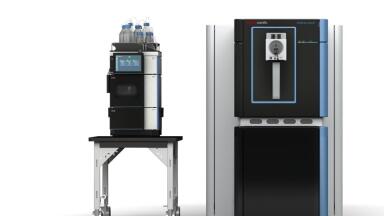
Figure 3: Automated sample preparation for titration with ePrep ONE and METTLER TOLEDO.
ILM 51.6 Sept 2026



 Product directory














.jpg)


.jpg)

.jpg)



.jpg)
