.jpg)
Laboratory products
The rapid growth of lithium-ion battery technologies has driven increasing demand for reliable analytical methods to characterise both battery materials and recycling streams. Accurate determination of elemental composition is essential for quality control of individual battery components as well as for the efficient recovery of valuable materials at the end of a battery’s lifecycle.
Robust and reproducible sample preparation is a key prerequisite for such analysis. This article focuses on microwave-assisted acid digestion as an effective approach for preparing battery-related samples. Two types of samples are considered in this study: selected battery components, which are analysed to evaluate their composition, and so-called ‘black mass’, the powdered fraction obtained from end-of-life battery packs after collection, dismantling, and shredding. Black mass contains electrode materials, binders, additives, and residual electrolyte components. Rich in valuable metals such as lithium, manganese, cobalt, and nickel, it represents a key resource for recycling.
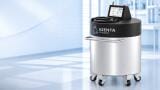
Acid digestions were carried out using a Multiwave 7501 microwave system with a pressurised digestion cavity (PDC) (Figure 1). The Multiwave 7101/7301/7501 series enables temperature levels of up to 300°C, ensuring complete digestions for demanding samples. A streamlined acid digestion workflow allows the full range of samples to be processed in the same run. Multiwave instruments support high and low sample amounts as well as high and low volumes, using disposable glass, quartz, or PTFE vials with plug-on caps.
Figure 1: Multiwave 7501.
The determination of the exact and consistent elemental composition of electrode raw materials is important both during development as well as for quality control in battery manufacturing, which are critical for the performance and safety of the end products. In addition, impurity concentrations must also be accurately measured in battery components. Numerous aging mechanisms occur due to degradation processes of individual materials and their interactions. Therefore, in addition to raw material composition, quantitative data throughout the product life cycle on the distribution of lithium and transition metals in the bulk and on the electrode surface is needed to understand aging processes and develop countermeasures that minimise adverse effects on battery performance [1].
Figure 2: Battery raw materials.
Lithium-ion batteries typically consist of lithiated metal oxides or phosphates as the positive electrode (cathode) material, a graphite-based material as the negative electrode (anode) material, and a suitable electrolyte. The electrolyte consists of a well-defined blend of organic carbonates and a conducting salt, typically LiPF6. A thin polymer foil serves as separator, electrically isolating the electrodes while remaining permeable to lithium ions.
In this study, lithium-ion battery components, including various cathode and anode materials as well as separator foils, were digested using tailored reaction media. Due to differences in chemical composition and material properties, digestion conditions were adapted accordingly, and samples were grouped based on their temperature requirements. This highlights the importance of flexible and application-specific sample preparation strategies when dealing with the wide variety of materials used in modern battery systems.
Powdered samples were weighed into digestion vials, and stir bars were added to ensure proper mixing. Selected samples were spiked with a multi-element standard for recovery studies. Sample-specific acid mixtures were added, and where necessary, pre-reactions were allowed at room temperature. The sealed vials were digested in a microwave system using tailored temperature programs and placed in a liner containing 150 mL of water and 5 mL of concentrated HNO₃. After digestion, the solutions were quantitatively transferred to 50 mL volumetric vials and rinsed to ensure complete recovery.
Titanates, carbonaceous materials, and especially graphite require long hold times at high temperatures and acid mixtures with sufficiently high oxidation potential. For graphitic samples, the oxidation potential of the acid volume used in one digestion step is not sufficient for complete digestion and residues may remain.
One safe approach to overcoming this issue is the two-step digestion procedure. In the first digestion step, most of the inorganic matrix is destroyed, and residual reaction gases are released upon careful opening after digestion. Fresh oxidant is then added to the mixture, and a second digestion step is performed to decompose the remaining residues.
Another approach for highly corrosion-resistant samples like graphite is to perform a single-step leaching procedure with less acid usage but higher possible sample weights. Black residues will remain; however, these extensively leached residues are assumed not to contain elements of interest. They can be easily removed using a syringe filter.
The following temperature program was used for the digestion procedures:
Starting pressure: 40 bar
Cooling temperature: 80°C
Pressure release rate: 10 bar/min
Table 1: Temperature program for lithium-ion battery components.
Figure 3: Multiwave 7501 program for battery components.
Despite the different reactivity of the samples, a perfect temperature profile was achieved using PDC technology, which compensates for mild exothermic reactions. All samples were successfully digested and appeared clear. The NMC (lithium nickel manganese cobalt oxide) digestion solutions appeared coloured due to their cobalt content.
Figure 4: Digested samples. NMC,
LMO, LFP, separator, separator – Al2O3 coated.
The digestion recipe and analysis results for the cathode material NMC are shown below.
Table 2: NMC recipe.
Table 3: Results for major components in NMC.
Major components
in NMC Determined
concentration [%]
Ni 19.8
Co 19.3
Mn 18.4
Li 7.5
Zn 0.1
In hydrometallurgical recycling processes, black mass is typically subjected to acid leaching, where metal species are dissolved and subsequently recovered. For efficient process design and optimisation, detailed knowledge of its chemical composition is essential. Microwave-assisted digestion enables complete, residue-free dissolution of such challenging samples, forming the basis for accurate elemental analysis, for example by ICP-OES.
Two samples were analysed: a black mass sample and a leaching residue, hereafter referred to as the solid residue. The solid residue is obtained from the selective leaching of black mass using an acid in combination with an oxidising agent at elevated temperatures. During the leaching process, soluble components such as Co, Ni, and Mn are transferred into the liquid phase. In this case, the process parameters were adjusted so that Cu remains in the solid residue, thereby enabling more efficient downstream hydrometallurgical processing.
For each sample, 0.1 g of material was mixed with a four-acid mixture consisting of 2 mL of nitric acid, 3 mL of sulfuric acid, 0.5 mL of perchloric acid, and 0.2 mL of tetrafluoroboric acid.
A stir bar was added to each vial, after which the following temperature program was applied:
- Starting pressure: 40 bar
- Cooling temperature: 80°C
- Pressure release rate: 10 bar/min
Table 4: Temperature program for black mass samples.
Step Time Temperature Stirring
1. Ramp 30 min 280 °C High
2. Hold 30 min 280 °C High
To enhance oxidation efficiency, a two-step acid digestion procedure was applied, in which fresh oxidant (1 mL of perchloric acid) was added. The same digestion program was repeated to decompose any remaining graphitic residues.
Prior to dilution to a final volume of 50 mL, yttrium was added to both calibration and sample solutions (final concentration: 1 mg/L) as an internal standard.
All measurements were performed on an iCAP PRO X Duo (Thermo Fisher Scientific®) in axial view mode, with a cyclonic spray chamber and a glass concentric nebuliser. Each black mass material was digested three times and measured five times (ICP-OES values, n = 5).
Both samples were successfully digested using a four-acid mixture containing perchloric acid in a two-step digestion procedure. The resulting temperature profile closely followed the specified temperature program (Figure 5).
Figure 5: Multiwave 7501 program for black mass.
After the second digestion step, both samples appeared clear and green-coloured (Figure 6).
Figure 6: Digested solutions of black mass before leaching (left) and solid residue after leaching (right).
The results of the element determination via ICP-OES were as follows:
Table 5: Major components of black mass before leaching and solid residue after leaching.
Element Black mass Solid residue
Ni 14.6% 6.7%
Co 6.7% 2.9%
Mn 7.6% 0.49%
Al 3.5% 2.3%
Cu 7.4% 19.8%
Fe 0.07% 0.05%
Li 1.8% 0.63%
The chemical analysis of the black mass sample, summarised in Table 5, reveals high concentrations of Ni, Co, and Mn, indicating that the processed input material predominantly consists of LIBs containing lithium nickel manganese cobalt oxide (NMC) and lithium cobalt oxide (LCO) cathode materials. As intended in the selective leaching process, Cu remains largely unleached. Aluminium and copper originate from the current collectors commonly used in LIBs. The relative proportion of Cu in the elemental analysis increases from the black mass to the solid residue, which can be attributed to the overall mass reduction resulting from the leaching of the other valuable metals.
This insight may be used to improve leaching and increase the overall efficiency of the recycling process.
This study shows that a variety of battery materials can be conveniently digested with Multiwave 7501 in a single run. Only graphite, due to its pronounced crystallinity, requires an additional digestion step to be completely dissolved. The single-step leaching procedure can be recommended as a viable alternative.
Comparing black mass before leaching with the solid residue after leaching provides valuable insights into the effectiveness of the hydrometallurgical recycling process. The results show that the copper and graphite components of the black mass remain largely unaffected by leaching, while active materials such as NMC and decomposition products, including lithium and manganese salts, are removed.
ILM 51.6 Sept 2026



 Product directory












.jpg)

.jpg)

.jpg)
.jpg)
.jpg)

.jpg)
