Chromatography
Published over 13 years ago. See the latest and most current information on Chromatography.
The University of Texas at Arlington and Thermo Fisher Scientific have been granted a United States patent for a novel charge detector for ion chromatography.
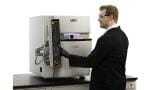
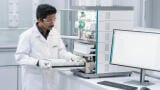
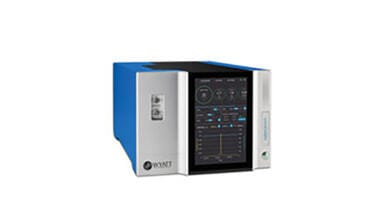
The technology was jointly developed by the two companies, and has been commercialised as the Thermo Scientific Dionex QD Detector. It will be used for the analysis of polyphosphates by environmental testing laboratories.
UT Arlington professor Purnendu Dasgupta invented the charge detector, with assistance from Bingcheng Yang of his research group and Kannan Srinivasan, technical director for Dionex Corporation, which is a subsidiary of Thermo Fisher Scientific.
Mr Dasgupta has collected a number of national and international awards for his studies in the field of ion chromatography, such as the 2012 Dai Nogare award and the 2011 American Chemical Society Award in Chromatography.
He has been awarded over $18 million (£11 million) in research grants, and this latest patent is his 23rd in the US
Membrane-based technology is used in the DIonex QD detector, wth ions being detected in proportion to their charge and concentration, allowing reliable quantification of known and unknown compounds under one single standard.
Carolyn Cason, vice president for research at UT Arlington, commended Mr Dasgupta and his team for their work on the technology.
"We are particularly proud that this innovation has made its way into the marketplace. One of the hallmarks of a vibrant research university is the ability to team with industry to advance scientific application, and this is what Dr Dasgupta has done."
Chris Pohl, Thermo Fisher vice president of chromatography chemistry, described the breakthrough as a "game changer" in the industry.
"Charge detection, when combined with suppressed conductivity detection, can be used as a confirmatory tool or as a complementary detector to provide additional analytical information," he explained.
Thermo Fisher has established itself in the industry, with the company now home to around 39,000 workers, serving customers in pharma and biotech businesses, along with universities, hospitals and other organisations.
Posted by Fiona Griffiths
ILM 51.6 Sept 2026

 Product directory